
Building knowledge graphs for ai is the foundational practice of structuring domain information into interconnected nodes and edges, providing large language models with the explicit context they need to deliver accurate responses. Modern artificial intelligence applications often struggle with isolated data silos and unstructured text files. By organizing concepts, entities, and relationships into a visible graph format, engineering teams establish a reliable framework that bridges the gap between raw data storage and complex reasoning engines.
Why Do Large Language Models Need Structured Context?
Large language models excel at processing natural language, but they frequently hallucinate when asked about specific enterprise facts. Raw text lacks explicit boundaries regarding how products relate to categories, or how internal team members connect to specific projects. Knowledge graphs represent information as interconnected nodes and edges, providing structured context for LLMs to reduce guesswork. Instead of parsing millions of unorganized document pages, an AI query can traverse defined pathways to retrieve exact relational data.
Consider a standard e-commerce catalog in a typical account. Without a structured graph, an internal search tool might match keywords loosely, pairing a winter coat with summer accessories simply because they share a category tag in a flat database. A properly structured graph explicitly defines that the coat belongs to outerwear, connects to specific thermal ratings, and relates to compatible layering items. This clarity prevents search failures and guides AI agents toward precise answers.
What Core Components Make Up a Functional Knowledge Graph?
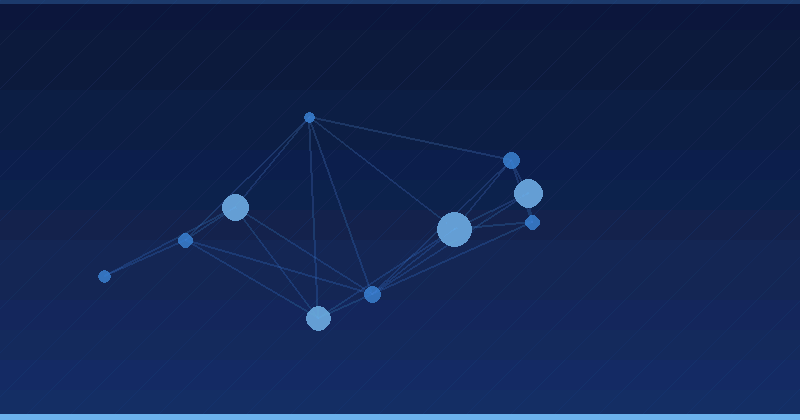
Every practical knowledge graph relies on three primary building blocks that define its architecture. Understanding these elements helps technical teams map out enterprise data effectively before writing custom integration scripts or deploying machine learning models.
- Nodes: Represent individual entities such as customers, products, locations, or technical concepts.
- Edges: Define the directional relationships connecting two nodes, such as ‘purchased’, ‘located_in’, or ‘depends_on’.
- Properties: Store specific attributes and metadata attached directly to individual nodes or edges for detailed filtering.
Defining these components requires collaboration between database administrators and domain experts. For instance, a software company building a technical support assistant must map out error codes, operating systems, and repair steps as distinct nodes. The edges connecting them dictate the logical troubleshooting flow that the AI assistant follows during user interactions.
How Does Graph Architecture Improve Retrieval-Augmented Generation?
Retrieval-augmented generation, commonly known as RAG, allows language models to pull external facts into their context window. Standard RAG implementations rely on vector embeddings stored in vector databases. While vector search finds semantically similar paragraphs, it often misses multi-hop relationships that span across different documents or database tables.
Graph-augmented generation combines vector search with explicit graph traversal. When a user asks a complex question involving multiple interconnected entities, the system queries the knowledge graph to gather the exact surrounding sub-graph. This sub-graph is then injected into the prompt alongside the standard vector search chunks. The language model receives both the prose and the structural map, resulting in factual accuracy and reduced context window pollution.
How Alien Road Applies Knowledge Graph Architecture
At Alien Road, our team helps organizations bridge the gap between messy operational data and high-performing artificial intelligence systems. A typical engagement begins with a comprehensive data audit to identify existing silos within CRM platforms, product databases, and document repositories. We map out primary entity types and define initial relationship schemas to establish a clean foundation.
Next, we deploy graph database infrastructure using established graph query languages to ingest and connect the disparate data sources. Once the nodes and edges are active, we integrate the graph layer directly into existing retrieval pipelines. This approach ensures that internal AI agents and customer-facing chat interfaces pull verifiable facts rather than relying on probabilistic generation alone, driving measurable improvements in response accuracy.
What Steps Are Involved in Graph Construction?
Building a production-ready knowledge graph demands a systematic approach to data ingestion, entity resolution, and continuous validation. Skipping phases often leads to disconnected islands of data that fail to support AI reasoning tasks effectively.
- Discovery phase: Identify key business domains, critical data sources, and primary user questions that the AI must answer.
- Schema design: Define node labels, edge types, and property constraints based on operational requirements.
- Data extraction and parsing: Clean and transform raw logs, SQL databases, and unstructured PDFs into structured triples.
- Entity resolution: Merge duplicate records representing the same real-world entity across different systems.
- Integration and testing: Connect the graph backend to the language model pipeline and test multi-hop retrieval accuracy.
Maintenance is an ongoing requirement once the initial build is complete. As product lines expand and customer policies shift, automated ingestion scripts must update the graph nodes in real time. Stale graphs lead to outdated AI responses, neutralizing the primary benefits of structured context integration.
Comparing Vector Search and Graph-Based Retrieval
| Retrieval Method | Primary Mechanism | Best Use Case |
|---|---|---|
| Vector Search | Semantic embedding similarity matching | Finding relevant paragraphs in unstructured text documents |
| Knowledge Graph | Explicit node and edge relational traversal | Answering complex multi-hop queries across connected entities |
| Hybrid Approach | Combined vector chunks and sub-graph injection | Production AI agents requiring both context and strict factuality |
Choosing between these approaches depends on the complexity of the domain data. Simple customer support bots answering FAQs from static manuals can often rely purely on vector search. Enterprise systems tracking complex supply chains, financial audits, or multi-product catalogs require a graph-backed architecture to maintain data integrity.
Where to Start This Week
Begin your knowledge graph initiative by selecting a single, well-defined business domain rather than attempting an enterprise-wide rollout immediately. Pick a dataset with clear relationships, such as a product catalog or an internal technical documentation library. Map out ten core entities and their immediate connections on a whiteboard or basic diagramming tool.
Next, evaluate your current data storage infrastructure to see if your existing database can support graph queries or if a dedicated graph storage engine is necessary. Export a small sample CSV file containing clean relational records and test importing it into a development environment. This small-scale proof of concept clarifies the effort required before scaling up to full production AI integration.
Frequently Asked Questions
What is the primary purpose of a knowledge graph in artificial intelligence?
A knowledge graph organizes domain information into interconnected nodes and edges, giving large language models explicit structural context. This explicit mapping reduces model hallucinations and enables accurate retrieval of multi-hop relational data across complex enterprise systems.
How do knowledge graphs differ from vector databases?
Vector databases store unstructured text chunks as mathematical embeddings to enable semantic similarity matching. Knowledge graphs store explicit entities and defined relationships, making them superior for tracing multi-step connections and strict categorical rules.
Can small businesses benefit from building knowledge graphs?
Small businesses with specialized product catalogs or intricate service offerings can benefit significantly. Starting with a small, focused graph helps internal search tools and customer support assistants deliver precise answers without enterprise-level complexity.
What tools are commonly used to build and store knowledge graphs?
Teams typically use specialized graph databases like Neo4j, Amazon Neptune, or open-source RDF triplestores. Data engineering pipelines often incorporate Python libraries such as NetworkX for in-memory graph manipulation and schema testing before database deployment.
How often should a production knowledge graph be updated?
Production graphs require continuous synchronization with operational databases. Whenever products change, policies update, or new entities emerge, automated ingestion scripts should update the graph nodes to prevent the AI from referencing obsolete facts.
Keep reading: AI Optimization · AI Optimization