
An LLM friendly site architecture is a structured framework that enables large language models to interpret, index, and retrieve content with high accuracy. By organizing information into logical tiers, you assist AI-driven crawlers in understanding the relationship between different topics on your domain. A clean, hierarchical site structure helps both traditional crawlers and LLM-based scrapers access content efficiently, ensuring that your core value proposition is clear to both search engines and generative AI systems.
Why does site architecture matter for AI?
AI models process information by tokenizing text and identifying patterns in relationships between data points. When a website follows a messy, flat, or inconsistent structure, an LLM may struggle to determine which content is primary and which is supplementary. A structured hierarchy acts as a map for these models, reducing the amount of ‘hallucination’ risk by providing clear context. When content is siloed correctly, the model can infer the intent behind specific pages more effectively, leading to more accurate summaries and citations in AI-generated answers.
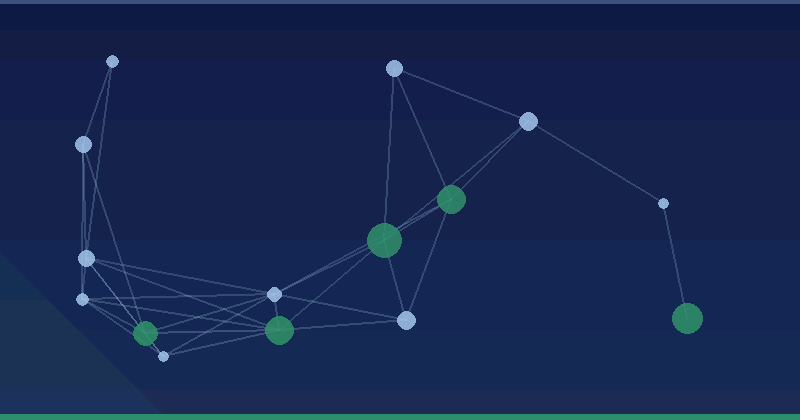
Consider a typical e-commerce site selling office supplies. If the architecture is deep and logical, moving from the homepage to categories like ‘Desk Chairs’ and then to ‘Ergonomic Chairs’ allows an AI to understand the category depth. If instead, the site uses a flat structure where everything is linked directly to the root, the model loses the signal regarding which products are related. This clarity is essential for appearing in AI overviews where the model must synthesize diverse product information into a cohesive recommendation for the end user.
What are the core components of a hierarchy?
Building a hierarchy that satisfies both bots and users requires a focus on navigation and URL consistency. Start with a homepage that links to top-level category pages. Each category should then link to sub-categories or specific product pages. This branching strategy creates a clean path that is easy for a crawler to traverse without getting stuck in infinite loops or encountering orphan pages that serve no clear purpose in the site taxonomy.
- Use descriptive, keyword-rich URL paths that mirror your site hierarchy.
- Implement internal linking that connects related content within the same category branch.
- Maintain a consistent header and footer structure across the entire domain.
- Ensure that your breadcrumb navigation matches your URL structure exactly.
How do you optimize internal linking for models?
Internal linking is the connective tissue of your site architecture. LLMs use these links to establish the importance of a page and its relevance to broader topics. A strong internal linking strategy avoids generic anchor text like ‘click here’ and instead uses descriptive phrases that define the target page. By linking from high-authority pages to deeper, more specific content, you guide the AI toward the pages you want it to prioritize in its knowledge base.

In a typical account, we often see that sites with clear link clusters perform better in AI-based retrieval. For example, if you manage a blog about financial planning, every article about ‘budgeting’ should link to other relevant posts on ‘debt management’ or ‘savings strategies’. This creates a semantic cluster that the model can interpret as a comprehensive knowledge hub. When the model needs to answer a question about debt, it will prioritize the site that demonstrates depth through these internal connections.
Is flat architecture better or worse for AI?
| Feature | Flat Architecture | Hierarchical Architecture |
|---|---|---|
| Crawler Path | Short and direct | Deep and logical |
| Contextual Clues | Low | High |
| AI Summarization | Difficult for models | Ideal for models |
How Alien Road applies site architecture principles
At Alien Road, our process for improving site architecture begins with a detailed audit of the current navigation and URL mapping. We look for ‘orphaned’ pages that exist but lack a clear place in the hierarchy. For example, in a typical engagement for a SaaS client, we find that migrating secondary landing pages into a logical parent-child folder structure significantly improves how AI models index their feature sets. We then update the XML sitemap to ensure the hierarchy is explicitly communicated to crawlers.
We also verify that the internal linking strategy supports the intended site structure. If a client is pushing a new service, we ensure that the navigation menu, breadcrumbs, and in-text links all point to that service page consistently. This consistency removes ambiguity for the AI. We monitor the results by observing how the site appears in AI summaries over time, ensuring that the content provided by the model aligns with our client’s core messaging and key service offerings.
How to start organizing your site architecture this week
Begin your week by exporting your entire URL list into a spreadsheet. Categorize every URL based on its current parent page or section. If you find pages that do not fit into any category, these are your primary targets for either deletion, redirection, or restructuring. This simple exercise often reveals the gaps that are currently confusing both your users and any LLM that attempts to crawl your site.
- Audit existing URLs to identify orphan pages or disconnected content.
- Map out a logical parent-child folder structure for all new content.
- Update your main navigation menu to reflect the new primary categories.
- Add internal links to orphan pages from relevant high-traffic articles.
Frequently Asked Questions
Does site architecture affect my ranking in AI overviews?
Yes, it does. AI models rely on the structure of your site to determine the relevance and authority of your content. A well-organized site allows the model to retrieve your information more reliably during the synthesis process. When your content is correctly categorized, the AI is more likely to use your site as a source for direct answers because it can easily identify the context of your page.
How many levels deep should a website be?
There is no single rule, but keeping the most important content within three clicks of the homepage is a solid practice. Deep structures can be beneficial for specific niche topics, but they should remain organized. If a user or a bot has to travel more than four or five levels deep to find information, it might be better to flatten the structure by promoting key pages to a higher level.
Will changing my URL structure hurt my current rankings?
Changing URLs can lead to temporary fluctuations in search performance. To minimize risk, always implement 301 redirects from your old URLs to the new ones. This tells search engines and crawlers that the content has moved to a new location. Ensure your sitemap is updated promptly after the change to help bots discover the new structure as quickly as possible.
What is the role of the XML sitemap in AI indexing?
The XML sitemap acts as a master index of your site for crawlers. While it does not replace the need for a logical internal structure, it provides a clear list of all your pages. Keeping this file updated and free of errors is a basic requirement for ensuring that AI-based crawlers have an accurate list of all your pages to evaluate and include in their training or retrieval datasets.
Keep reading: GEO – AIO – AEO · GEO