Programmatic SEO pages reach search engine index status when they provide distinct, valuable content that differs significantly from other pages on your site. You must ensure that each dynamically generated page offers a clear purpose to the user, rather than simply repeating boilerplate text with minor keyword variations. Google prioritizes pages that solve specific search queries effectively, meaning your technical infrastructure must support this intent.
Why does Google struggle with programmatic content?
Search engines often face challenges with large-scale programmatic deployments when the content feels thin or repetitive. If thousands of pages share the same template with only a single word changed, the crawler may view them as low-value assets. This leads to reduced crawl frequency and potential exclusions from the index.

The primary issue is that automated systems prioritize efficiency. If the crawler processes thousands of pages and finds that the majority contain identical boilerplate, it may stop scanning the remaining sections of your site. This behavior preserves the crawler’s resources for pages that offer unique, user-focused information.
For instance, a real estate site generating pages for ‘Apartments in X Neighborhood’ must include more than just the location name. Without unique local market data, nearby transit information, or specific property amenities, Google treats these as duplicate entries. Providing unique data transforms these pages from thin content into useful, indexable assets.
When a site scales to tens of thousands of pages, the risk of reaching a crawling limit increases. If your internal architecture is flat or poorly interlinked, Google may never discover the full depth of your database. Ensuring that your programmatic template provides a high density of unique signals is the first step toward getting these pages crawled and eventually indexed.
What signals do you need for successful indexing?
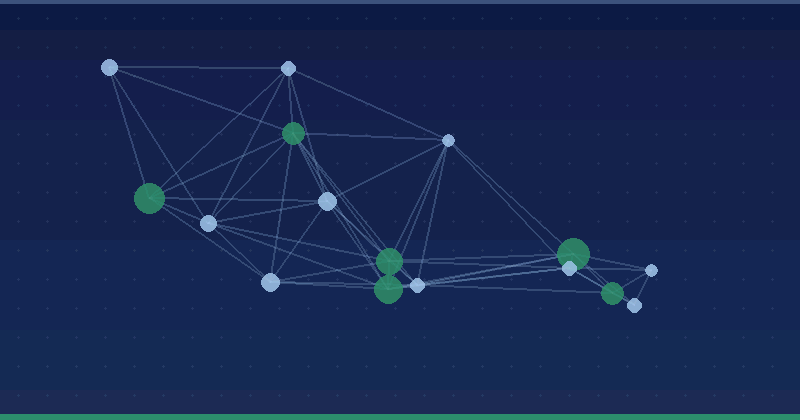
To ensure your pages stay indexed, you need to provide the crawler with clear internal linking and structural signals. Avoid orphaned pages by linking to your programmatic sets from your main navigation or category hubs. Use valid schema markup to define the entity or service your page describes, which provides machines with a clear understanding of the content’s context.
A structured approach to internal linking is necessary. If a page exists in your database but is not reachable through a crawlable path, it is effectively hidden from search results. Ensure that your category pages link to individual programmatic landing pages to provide the crawler with a logical map of the site hierarchy.
- Include unique data points like local statistics, comparison tables, or user reviews on every page.
- Ensure your internal link structure helps the crawler find new pages within two or three clicks.
- Use a valid sitemap file to inform Google about the scope of your generated URLs.
- Review your robots.txt file to confirm you are not blocking critical dynamic parameters.
Furthermore, consider the user journey. If a user lands on a programmatic page, they should see links to related categories or specific sub-pages. This interlinking strategy serves two purposes: it helps users find relevant information and creates a strong web of internal links that signals importance to the crawler.
How Alien Road applies this
In a typical engagement, we begin by auditing the unique value ratio of the template. We verify that each programmatic page includes distinct content blocks, such as specific regional data or custom summaries, rather than relying on standard database output. We then monitor crawl logs to observe how the bot visits these pages.
Our team at Alien Road sets up custom tracking for these deployments. We compare the index status of pages with high unique content density against those with lower density. By identifying which templates perform best in search results, we refine the content generation logic to ensure all new pages meet the same high standards.
Google Search aims to index the most relevant version of your page.
Google Search Central
We also manage the technical rollout by staging the indexation. Instead of pushing 50,000 pages at once, we often release them in batches to observe how the crawler reacts. This allows us to adjust the internal linking signals before the entire site reaches the index, ensuring that each page contributes positively to the overall site authority.
How do you manage crawl budget for large sites?
Crawl budget management is a vital aspect of maintaining a large programmatic site. If your site generates 50,000 pages, the crawler needs a logical path to find them. We recommend prioritizing high-intent pages in your sitemap and using canonical tags to point toward the most authoritative version of a page set.
When dealing with massive sets of pages, you must prevent the crawler from wasting time on redundant URLs. For example, if a search filter creates multiple URL permutations for the same set of products, implement a canonical tag on these variants. This tells the search engine to focus its attention on the master version of the page.
- Audit server logs to identify which sections of your site the bot visits most frequently.
- Consolidate thin pages into larger, more comprehensive content hubs when possible.
- Implement proper canonicalization to prevent duplicate content signals between similar product variations.
- Check your Search Console coverage report to identify pages excluded due to crawl anomalies.
Consider the impact of faceted navigation. If you have a clothing store with categories for size, color, and price, these filters can generate millions of URLs. Without proper management, the crawler will spend its entire budget on these variations rather than your core, high-converting content. Use the Search Console parameter tool or canonical tags to guide the crawler toward the main pages.
How does quality content influence indexation?
Quality is the baseline for indexing. Google uses machine learning to assess the intent and utility of every page. If your programmatic pages are designed merely to capture traffic without adding value, the system will eventually stop indexing them. Every programmatic deployment needs to be evaluated based on the question: ‘Does this page provide a unique answer to a user?’
Consider a case where a site creates pages for thousands of cities. If the template is identical for every city, Google will eventually ignore the vast majority of these pages. By injecting custom content—such as specific local business data or unique user testimonials—you signal to Google that each page is distinct and worth including in the index.
This quality assessment is not just about text volume. It is about how the content serves the searcher. If a page provides a table of data, a map, and a clear call to action, it provides more utility than a page with three paragraphs of generic text. Focus on adding functional elements that improve the user experience, as these are often easier for algorithms to recognize as high-value signals.
Where to start this week
Begin by reviewing your Google Search Console Indexing report to see the ratio of indexed versus excluded pages. Pick a sample of 20 URLs that are not indexed and check them for thin content or technical errors. Improve the unique content on these pages, re-validate the URL in the tool, and observe the results over the next two weeks to see if the status changes.
Next, audit your internal linking structure. Ensure that your programmatic pages are not buried in the site architecture. By placing links to these pages in the footer or sidebar, or by creating a dynamic sitemap that updates automatically, you provide the crawler with a direct path. Take these small steps this week, and you will see better results in your long-term index coverage.