
Knowledge graphs and vector databases are two distinct ways of organizing data for AI applications. Knowledge graphs represent data through entities and relationships, creating a map of interconnected concepts. In contrast, vector databases use mathematical distance in vector space to find similarities between data points. Choosing the right one depends on your specific goals regarding data structure, retrieval accuracy, and the type of queries you run on your systems.
How do knowledge graphs function?
A knowledge graph works by defining entities and the specific connections between them. If you have a customer database, an entity might be a specific client, while a relationship could be a purchase history or a demographic link. This structure is useful when you need to enforce strict rules about how data relates to other data points. It is precise and allows for complex logical queries that require deep contextual awareness.
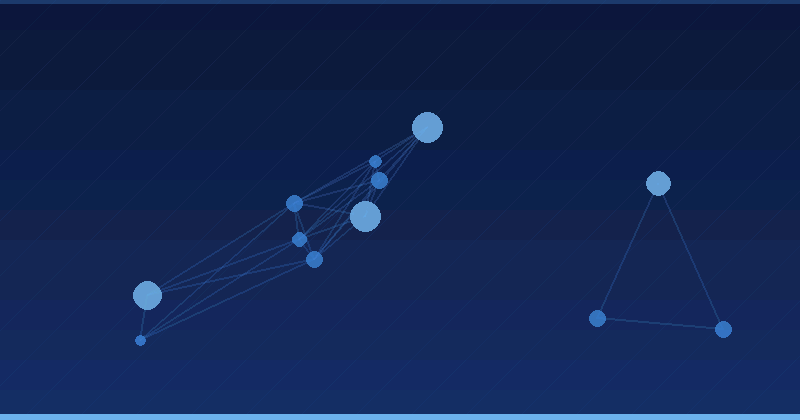
In a typical account, businesses use knowledge graphs to manage product catalogs where items have strict hierarchies or dependencies. For example, a retail store selling electronics might use a graph to ensure that a specific power cable is always linked to compatible monitors. This reduces errors in inventory management and customer support interactions. The graph acts as a single source of truth for the organization, providing clear, human-readable pathways between data points.
What is the role of a vector database?
A vector database operates by converting data into numerical representations known as embeddings. These embeddings sit in a multi-dimensional vector space, where the distance between points signifies how similar they are. This is the foundation of modern semantic search, as it allows machines to understand concepts rather than just matching exact keywords. When you query a vector database, it looks for the nearest neighbors to your input in that space.
This approach is highly efficient for unstructured data such as text, images, or audio files. If your website has thousands of support articles, a vector database can suggest relevant content based on the meaning of a user’s question, even if the phrasing does not match the keywords in the title. It handles ambiguity well and is a standard component for building applications that require fuzzy matching or recommendation engines.

Knowledge Graph vs Vector Database: Key Differences
| Feature | Knowledge Graph | Vector Database |
|---|---|---|
| Data Structure | Entities and Relationships | Mathematical Vector Space |
| Primary Use | Complex Logical Queries | Semantic Similarity Search |
| Flexibility | Strict and Structured | Dynamic and Adaptive |
When should you use a knowledge graph?
You should consider a knowledge graph when your data requires strict integrity and traceability. If you are building a system where a mistake in logic could lead to serious operational issues, the graph is your best choice. It forces you to define every entity and relationship upfront, which helps in auditing and maintaining complex datasets. This is essential for compliance-heavy industries or internal enterprise systems with deep hierarchies.
- Managing complex metadata with clear, predefined rules.
- Ensuring data consistency across multiple departments or software.
- Executing multi-hop queries where you need to traverse various relations.
- Building systems that require high levels of explainability for AI decisions.
When should you choose a vector database?
A vector database is the better option for applications involving unstructured content where the meaning is more important than specific tags. It is excellent for scaling because you do not need to pre-define every connection between documents. As you add new information, the vector space naturally accommodates it, allowing your search functionality to improve without needing a complete overhaul of your database schema.
- Implementing semantic search engines for user-facing websites.
- Developing recommendation engines that suggest items based on user behavior.
- Handling large volumes of unstructured data like logs, support tickets, or images.
- Rapidly prototyping AI features that rely on conversational understanding.
How Alien Road applies these technologies
At Alien Road, we often suggest a hybrid approach for clients who need both precision and speed. For a typical engagement, we might use a knowledge graph to manage the core facts about a client’s service offerings and pricing, while implementing a vector database to handle the user-facing search and discovery process. This ensures that the AI responses are grounded in verified data from the graph while remaining conversational through the vector database.
We begin by auditing the client’s existing data infrastructure to identify where logic is missing. We then map out the entities that need structure and deploy the graph. After that, we index the unstructured content into the vector store. This dual-layer setup allows us to monitor performance closely, adjusting the retrieval process to balance accuracy with response time. We keep the setup simple to ensure the client team can manage the data without needing constant technical intervention.
Frequently Asked Questions
Can you use both technologies at the same time?
Yes, many advanced systems use both simultaneously. This is often referred to as a Graph-RAG approach. The knowledge graph provides the structured facts and logic, while the vector database provides the semantic context. Combining them helps you avoid the hallucinations sometimes found in pure vector-based systems while keeping the conversational flexibility that users expect from modern AI interfaces.
Which one is harder to maintain?
Knowledge graphs are generally harder to maintain because they require a high degree of curation. Every new entity or relationship must fit the existing schema, which can become time-consuming as your dataset grows. Vector databases are easier to maintain because they do not require manual tagging; you simply embed the data and let the model handle the relationships within the vector space automatically.
Is one faster than the other?
Speed depends on the query type rather than the technology itself. A vector database is extremely fast at finding similarities across millions of records. A knowledge graph is faster at retrieving specific, interconnected facts based on fixed rules. If you need to find the shortest path between two points, the graph is faster. If you need to find the most similar document, the vector database is superior.
Where to start this week?
Start this week by auditing your current data. Categorize your documents into structured data (which needs a graph) and unstructured data (which needs a vector database). Once you have that list, pick one small, non-critical process to pilot. Use a vector database for a simple search bar project first. This will help you understand the embedding process before attempting to build a more complex, integrated architecture.
Keep reading: AI Optimization · AI Optimization