
Multi-agent ai systems for marketing involve specialized AI bots working together to complete complex marketing campaigns. Instead of relying on a single large language model to handle strategy, copywriting, media buying, and analytics all at once, marketing teams now divide labor across dedicated autonomous agents. Each agent focuses on a narrow domain, communicating with other bots to pass briefs, review assets, and adjust budgets in real time. This cooperative structure mirrors a human agency floor, where account managers, copywriters, and media planners hand off tasks systematically to reduce bottlenecks.
What are multi-agent AI systems for marketing?
A multi-agent network operates through role specialization. One agent acts as the researcher, scanning market trends and competitor keywords. Another agent functions as the copywriter, drafting ad variations based on the researcher findings. A third agent acts as the quality assurance checker, ensuring brand compliance before any asset reaches human review. These bots share a common memory space or message bus, allowing them to iterate on campaigns without constant human prompting. Multi-agent systems reduce prompt fatigue and minimize errors caused by single-prompt context limits.
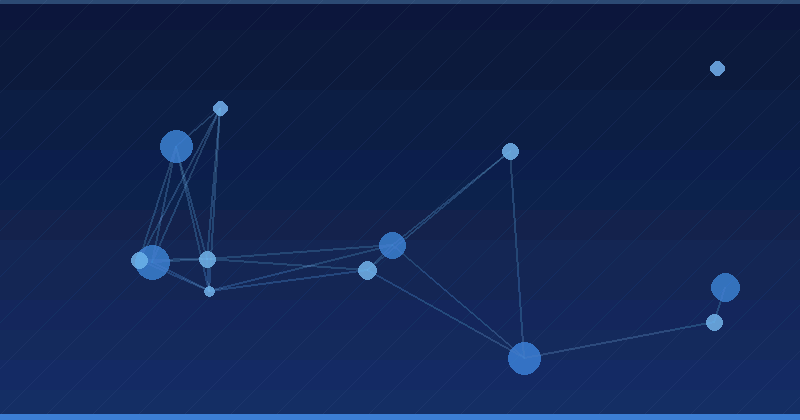
Coordinating these distinct roles requires a structured orchestration layer. Without clear communication protocols, agents can produce conflicting outputs, such as targeting an audience segment with messaging that contradicts the current promotional calendar. Setting up strict permission rules and review gates between agents keeps the workflow aligned with actual business objectives. For example, the budget allocation bot cannot increase spend until the performance analytics bot confirms a stable conversion rate over a defined observation window.
How do specialized AI bots collaborate on campaigns?
Collaboration in multi-agent frameworks relies on message passing and state sharing. When a marketing campaign kicks off, the master planner agent breaks the overarching brief into discrete tasks. It assigns a target audience analysis to the data agent, a channel strategy to the media agent, and a creative angle to the content agent. Each agent processes its portion of the work and publishes the result to a shared repository. Subsequent agents read these outputs to build the next layer of the campaign, creating a continuous loop of creation and refinement.
This division of labor solves the context window problem common in traditional AI tools. When you feed an entire campaign brief, historical sales data, brand guidelines, and channel requirements into one prompt, the model often forgets critical constraints. Multi-agent systems bypass this limitation by isolating context. The copy agent only reads the brand voice guidelines and the specific headline requirements for a single ad placement, maintaining high adherence to style rules.

What core components build a marketing agent network?
- The Orchestrator Agent: Directs workflow, assigns tasks, and monitors campaign milestones.
- The Data Retrieval Agent: Pulls analytics, keyword reports, and customer feedback into the system.
- The Content Generation Agent: Drafts emails, ad copy, and landing page wireframes based on briefs.
- The Compliance Agent: Audits all generated assets against regulatory guidelines and brand safety rules.
- The Media Optimization Agent: Adjusts bids and targeting parameters based on incoming performance feeds.
Why use multi-agent setups instead of single prompts?
Single-prompt workflows often produce generic output because they try to satisfy too many conflicting requirements simultaneously. A prompt asking an AI to write a high-converting landing page, optimize for search intent, maintain brand voice, and format for mobile responsiveness usually results in compromises across all four areas. Multi-agent configurations assign each of those requirements to a distinct specialist bot. The SEO agent reviews the draft for keyword density, the conversion rate optimization agent suggests layout adjustments, and the brand guardian reviews tone.
Another major advantage is error detection and self-correction. In a multi-agent environment, one bot can review the work of another before a human ever sees it. If the content agent produces a claim that violates platform policies, the compliance agent flags the error and sends it back for revision. This automated feedback loop saves hours of manual editing and speeds up the time it takes to move from initial concept to live campaign launch.
How can teams deploy their first agent workflow?
Starting with multi-agent architecture does not require building an entire department of bots overnight. Begin with a two-agent setup focused on a single repetitive task, such as content creation and review. Connect a writing model to a strict validation script or a secondary model trained on brand guidelines. Once that pairing runs reliably, introduce a third agent responsible for gathering performance data or formatting exports for your email service provider.
- Step 1: Identify a repetitive campaign workflow that currently requires three or more manual handoffs.
- Step 2: Define clear inputs and outputs for each stage of that workflow.
- Step 3: Assign specialized prompts or fine-tuned models to act as distinct agents for each stage.
- Step 4: Establish a communication protocol or shared database where agents deposit their completed work.
- Step 5: Run a pilot test with human oversight at every approval gate before granting autonomous execution rights.
How Alien Road applies multi-agent systems
At Alien Road, we deploy multi-agent frameworks to help clients manage complex, multi-channel digital marketing operations without expanding head count. Our standard engagement begins with a discovery phase where we map the client existing content production and media buying pipelines. We then configure custom agent networks tailored to their specific CRM, ad platforms, and brand guidelines. The orchestrator agent manages weekly sprint plans, while specialized sub-agents handle audience research, ad variation generation, and performance reporting.
Throughout the campaign lifecycle, human strategists remain at critical validation points to ensure creative direction aligns with broader business goals. The agents handle heavy data processing, bulk asset production, and continuous bid monitoring, freeing our team to focus on high-level growth strategy and creative innovation. This blended model delivers faster campaign execution and tighter alignment across paid and organic channels.
What challenges appear when scaling agent networks?
Scaling multi-agent architectures introduces distinct technical and operational hurdles. As the number of communicating bots increases, latency often rises because each agent must wait for upstream inputs before processing its task. Debugging communication failures also becomes harder; tracing why a campaign went live with incorrect targeting parameters requires reviewing logs across four or five different agent interactions. Establishing rigid logging practices and clear fallback behaviors helps maintain operational stability.
Cost management is another factor to watch closely. While multi-agent systems save labor hours, they generate a high volume of API calls as agents converse, review, and revise work iteratively. Setting token limits, caching common research queries, and using smaller open-source models for routine validation tasks helps keep operational expenses sustainable as campaign volume scales.
Where to start this week
Pick one isolated marketing task, such as generating monthly blog outlines or updating product descriptions across your catalog, and design a simple two-agent handoff. Document the prompts, test the automated handoff manually if necessary, and measure the time saved compared to your traditional workflow. As you gain confidence in how specialized bots interact, gradually add verification layers and expand the system into broader campaign management.
Keep reading: AI Marketing Agency · AI Marketing