
Predictive analytics helps marketers anticipate future customer actions by analyzing historical data patterns to improve budget allocation and campaign timing. You use these models to estimate future revenue, identify potential churn, and determine which leads are most likely to convert. By applying statistical algorithms to your own CRM and advertising platform data, you gain a clearer view of what might occur in the coming months. This approach reduces guesswork and helps you plan your marketing spend with more confidence.
Why should you use predictive analytics for forecasting?
Forecasting based on intuition often leads to overspending in low-return areas and missing chances in high-value segments. When you use predictive analytics, you shift the focus toward calculated probabilities rather than simple past performance. If a typical e-commerce account spends 2000 dollars a month on social ads, predictive models help distribute that budget across specific weeks where historical trends suggest a higher probability of conversion. This allows for a more stable approach to campaign management, ensuring that your resources go toward the initiatives that provide the most consistent results.

In a typical account, you might notice that seasonal patterns repeat every year. Predictive analytics automates the detection of these cycles, allowing you to prepare your inventory or ad creative before the peak hits. Instead of reacting to trends after they emerge, you position your brand to catch the interest of your audience as they enter their buying phase. This proactive strategy simplifies the planning process and helps keep your cost per acquisition within a predictable range throughout the year.
What data do you need to start the process?
To build a reliable predictive model, you need clean, organized, and historical data. Information silos often prevent accurate forecasting, so you must aggregate data from your website analytics, your CRM, and your advertising dashboards. If you use a CRM like Salesforce or HubSpot, you should focus on extracting lead status changes, deal values, and conversion timelines. These variables provide the raw material that models need to identify the factors that lead to a successful sale.
You must also collect consistent advertising data, including spend, impressions, clicks, and specific goal completions. Ensure that your tracking parameters are uniform across all channels to avoid data discrepancies. For example, if you track a newsletter sign-up as a conversion in one channel but not in another, your model will produce inaccurate results. Spend time cleaning this data to remove duplicates or incomplete entries before you feed it into any analysis tool or spreadsheet application.
How to build your first predictive model
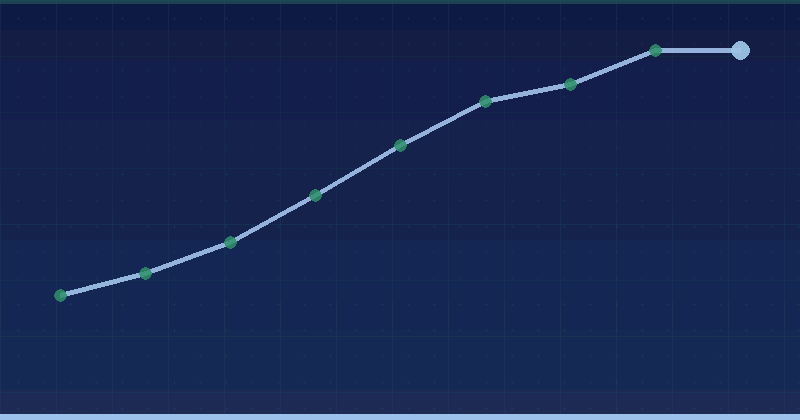
Start with a simple linear regression model if you are new to this process. This method allows you to predict a dependent variable, such as future monthly sales, based on one or more independent variables like previous spend or website traffic. You can use common spreadsheet software to perform these calculations, which helps you visualize the relationship between your marketing efforts and your outcomes. As you become comfortable with these basics, you can move toward more complex models that account for multiple variables simultaneously.
Follow these steps to set up your initial forecast:
- Select a specific goal, such as predicting monthly lead volume from paid search.
- Gather at least 12 to 24 months of historical performance data for that specific channel.
- Identify external factors that influence your results, such as seasonal promotions or industry events.
- Apply a regression formula to calculate the expected trend line based on your historical growth.
- Compare your model’s predictions against actual performance each month to refine your accuracy.
How Alien Road applies predictive analytics
At Alien Road, we integrate predictive modeling into our client strategy by focusing on long-term stability and specific growth targets. We start by performing a thorough audit of the client’s historical data to ensure that the inputs are reliable and representative of their business cycle. In a typical engagement, we map out the customer journey to identify the key touchpoints that correlate with high-value conversions. We then use these insights to adjust bidding strategies in real-time within the advertising platforms.
Our process involves creating custom dashboards that display both actual performance and projected outcomes. This allows us to spot deviations early and adjust our tactics before they impact the monthly bottom line. We focus on transparency, showing clients how specific data points influence our budget recommendations. By keeping our models focused on objective metrics, we maintain a clear path for our clients to meet their stated marketing objectives throughout the duration of our partnership.
What are the common pitfalls in predictive forecasting?
One major risk is over-reliance on historical data when the market conditions have changed significantly. If you use performance data from a year with high volatility to predict a year with stable growth, your forecast will likely be inaccurate. You must always account for anomalies, such as supply chain disruptions or sudden shifts in competitor behavior. Another pitfall is overfitting your model, where you include too many variables that do not actually influence the outcome, leading to noise rather than signal.
You should also watch for data bias. If your historical data only comes from a single demographic or channel, your forecast will fail to predict how new segments might behave. Always keep your model open to new information and update it frequently. A forecast is a living document that requires regular maintenance to remain useful for your decision-making process. If you notice a consistent gap between your predictions and reality, it is time to reassess the variables you are using and the assumptions you have built into the model.
How do you evaluate the success of your models?
Evaluation requires you to compare your predictions against actual outcomes over a set period. Use a metric like Mean Absolute Error to understand how far off your predictions are on average. If your model predicts 100 leads and you get 95, your error rate is low and the model is likely reliable. If the variance is consistently high, you need to investigate the underlying data for missing variables or external influences that the model is failing to capture.
Use this checklist to maintain your forecasting accuracy:
- Review your forecast accuracy every month to check for performance gaps.
- Update the model with the most recent performance data to keep it current.
- Document any significant changes in your business, such as new product launches, that might impact future data.
- Adjust your model parameters if market shifts make old data less relevant.
- Keep your model simple to ensure you can explain the logic behind your predictions to stakeholders.
Where to start this week
Start your journey by selecting one specific campaign or channel to forecast for the next 30 days. Export the last six months of performance data into a spreadsheet and calculate the average weekly growth rate. Use this simple average to project the next four weeks of results and see how close you get. This small experiment will show you how much of your current performance is predictable and where you need more data or better tracking. Once you have mastered this basic projection, you can gradually add more complexity and more variables to your marketing forecasting process.
Take the time to examine your data sources this week to ensure they are clean and accurate. If you find gaps, address them by fixing your tracking codes or consolidating your reporting tools. A solid foundation is more important than a complex model. With accurate data and a simple, logical approach to analysis, you will find it much easier to make informed decisions about your marketing budget and your future strategy. Build your process slowly, keep it transparent, and refine it based on real results.
Remember that predictive analytics is not about predicting the future with perfect certainty. It is about narrowing the range of possibilities so you can make better-informed decisions. By focusing on trends and patterns, you position your marketing efforts to respond to the market rather than just reacting to it. Start with what you have, track your progress, and continue to improve your model as you gain more insights into how your customers interact with your brand.
Keep reading: Strategic Planning · Digital Marketing