
Benefits of multi agent systems include the ability to distribute complex digital marketing tasks across specialized AI entities that collaborate to solve problems more effectively than a single model could. This architecture allows organizations to handle intricate workflows, such as simultaneous keyword research and technical site audits, by assigning dedicated agents to specific sub-tasks. By using this collaborative structure, businesses improve their capacity to manage large-scale data processing while maintaining high accuracy in their marketing outputs. Multi-agent systems allow different specialized agents to collaborate, which can improve complexity handling compared to single-agent setups.
What are the core benefits of multi agent systems?
A primary advantage of a multi-agent setup is the reduction of cognitive load on any single AI model. When you ask a single LLM to perform five different tasks, such as writing a blog post, checking SEO density, generating meta tags, finding internal links, and formatting HTML, the quality often degrades. In a typical account environment, we see that specialized agents perform better because they have a narrow focus. One agent acts as the researcher, pulling data from the Google Search Console API, while another acts as the editor, ensuring the tone matches your brand guidelines. This separation of concerns prevents the hallucination issues that often occur when a single model tries to balance too many conflicting instructions.

Another significant benefit is the inherent modularity of these systems. If you need to change your SEO strategy from targeting high-volume keywords to focusing on long-tail intent, you only need to update the instructions for the ‘Researcher Agent’ rather than rewriting your entire automation prompt. This flexibility allows marketing teams to adapt to algorithm updates or market shifts within hours rather than days. Furthermore, the parallel processing capabilities of multi-agent frameworks mean that multiple agents can work on different parts of a project at the same time, significantly shortening the production cycle for complex campaigns.
How do multi agent systems handle complex marketing data?
Handling vast amounts of data from different sources is a common challenge in digital marketing. Multi-agent systems address this by assigning data parsing, cleaning, and analysis to distinct agents. For example, in a technical SEO audit, one agent might be responsible for processing a CSV export from Screaming Frog with 10,000 rows. A second agent can then take the filtered results—perhaps focusing only on 404 errors or missing H1 tags—and cross-reference them with historical traffic data from a SQL database. This layered approach ensures that the final report is not just a dump of raw data but a curated list of actionable insights that a human manager can review quickly.
In a typical account where data is siloed between CRM systems like HubSpot and advertising platforms like Meta Ads Manager, multi-agent systems act as a bridge. They can extract performance metrics from one platform and compare them against lead quality scores in another. Because each agent can be programmed with specific logic for its data source, the risk of misinterpreting metrics like ROAS or CPA is minimized. This systematic approach to data management allows for more granular reporting, which is essential for making informed budget allocation decisions across various digital channels.
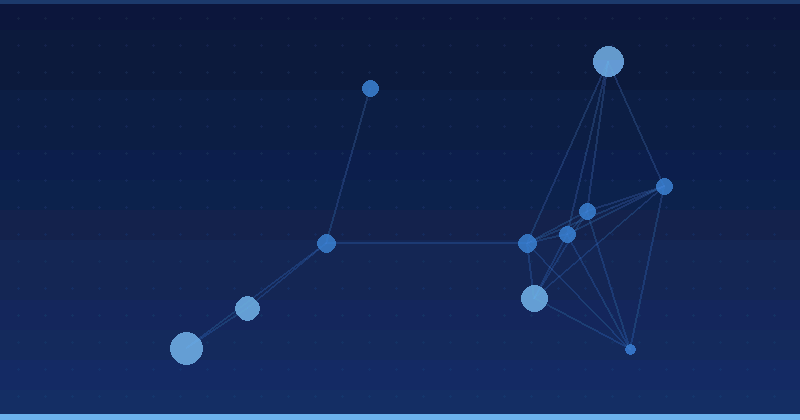
- Data Integration: Agents connect to multiple APIs to pull real-time marketing metrics.
- Error Correction: Specialized agents identify and flag anomalies in data sets before they reach the final report.
- Context Preservation: Agents maintain the context of the marketing strategy across different data processing stages.
- Scalability: The system can handle increasing data volumes by adding more worker agents to the pool.
Can multi agent systems reduce operational errors in PPC?
Operational errors in pay-per-click advertising often stem from human fatigue or the oversight of small details across hundreds of ad groups. Multi-agent systems mitigate these risks by providing constant, automated oversight. A common pattern is to have a ‘Monitoring Agent’ that checks Google Ads accounts every hour for sudden spikes in cost-per-click or drops in conversion rates. If an anomaly is detected, a ‘Reporting Agent’ can immediately notify the team via a Slack webhook or an email alert. This proactive management prevents budget waste that might otherwise go unnoticed until the end of the day or week.
Additionally, these systems can assist in creative testing and ad copy generation without the repetitive strain of manual entry. One agent can focus on generating 50 variations of headlines based on top-performing keywords, while another agent evaluates those headlines against a checklist of compliance rules and brand voice requirements. This dual-layer verification process ensures that the ad copy is not only optimized for the algorithm but also remains safe and consistent with the company’s public image. By automating the verification steps, agencies can manage more accounts without increasing the headcount of their operations team.
Enhancing workflow efficiency through agent specialization
Specialization is the cornerstone of efficiency in any workforce, and AI agents are no exception. In a multi-agent framework, you can define specific ‘tools’ for each agent. For instance, a ‘Technical Agent’ might have access to a Python interpreter to run custom scripts for log file analysis, while a ‘Creative Agent’ might have access to DALL-E or Midjourney for generating visual assets. This allows each agent to use the best tool for its specific job. In a Shopify store scenario, for example, a multi-agent system could manage the entire product launch process, from generating product descriptions to creating social media posts and updating the inventory database.
This specialization also extends to the logical reasoning required for different tasks. A ‘Critic Agent’ can be programmed to be highly skeptical, looking for flaws in a marketing plan, while a ‘Planner Agent’ focuses on logistics and deadlines. When these two agents interact, the resulting plan is often much more resilient than one generated by a single model that tends to agree with its own initial suggestions. This internal peer-review process within the AI system creates a higher standard of output, reducing the time human supervisors spend on basic editing and correction tasks.
The role of the Manager Agent in complex workflows
To keep specialized agents aligned, a ‘Manager Agent’ is often employed to oversee the entire process. This agent does not perform the technical tasks itself but instead routes information between the worker agents. It checks the output of the ‘Researcher Agent’ before passing it to the ‘Writer Agent’ and ensures that the final project meets the initial requirements set by the user. This hierarchical structure mimics a real-world marketing department, providing a clear chain of command and accountability within the automated system. It ensures that the workflow remains on track and that the final delivery is cohesive.
Comparing single-agent vs multi-agent performance
When evaluating whether to move from a single-agent setup to a multi-agent system, it is helpful to look at the complexity of the tasks being performed. Single agents are excellent for quick, one-off queries or simple text generation. However, as the task length increases, single agents often suffer from ‘forgetting’ earlier instructions or losing focus on the main objective. Multi-agent systems solve this by breaking the task into smaller, manageable chunks. Each agent only needs to remember its specific role and the immediate data it is processing, which leads to a much higher success rate for long-form content or deep technical analysis.
- Task Success Rate: Multi-agent systems show higher completion rates for multi-step projects.
- Instruction Adherence: Specialized agents follow complex constraints more accurately than a single model.
- Resource Consumption: While multi-agent systems may use more tokens, the reduction in manual rework often lowers the total cost.
- Error Isolation: If one agent fails, the entire system does not necessarily crash, allowing for easier debugging.
Technical requirements for multi-agent integration
Implementing these systems requires a basic understanding of orchestration frameworks like CrewAI or LangChain. These tools allow you to define agents in Python, assign them roles, and provide them with specific tools. For a typical setup, you would need an API key from a provider like OpenAI or Anthropic and a local environment running Python 3.10 or higher. You must also consider the latency of the system; because agents often communicate back and forth, a multi-agent workflow will take longer to complete than a single prompt. However, the quality of the result usually justifies the extra few minutes of processing time.
Security and data privacy are also central considerations. When agents are interacting with internal business data, it is a common pattern to use local models or private cloud instances to ensure that sensitive information does not leave the company’s secure environment. Many practitioners use frameworks that support local LLMs via tools like Ollama or vLLM. This allows businesses to enjoy the benefits of multi-agent systems while maintaining strict control over their data assets. Setting up these boundaries early in the development process prevents future compliance issues with regulations like GDPR or CCPA.
How to implement a local multi-agent framework?
To start with a local multi-agent setup, you can use the CrewAI library, which is popular for its simplicity and focus on role-playing agents. First, you install the library using ‘pip install crewai’. Then, you define your agents by specifying their role, goal, and backstory. For a content marketing workflow, you might create a ‘Senior SEO Researcher’ and a ‘Tech Content Writer’. You then define the tasks that these agents will perform and the sequence in which they will perform them. By running the script, the agents will begin to communicate, share information, and produce a final document based on their collaborative effort.
A key setting to monitor during this implementation is the ‘max_iterations’ parameter. This prevents agents from getting stuck in a loop if they cannot find a satisfactory answer. Setting this to a reasonable number, like 10 or 15, ensures the system terminates and provides the best possible result within a set timeframe. You should also experiment with different temperature settings for each agent; a ‘Writer Agent’ might benefit from a higher temperature for creativity, while a ‘Fact-Checker Agent’ should have a temperature of 0 to ensure strict accuracy and reliability in its findings.
Where to start this week
Identify one repetitive marketing workflow that involves at least three distinct steps, such as a weekly performance report or a blog post production cycle. Map out the specific roles involved in this workflow as if you were hiring human staff for each step. Once you have these roles defined, try setting up a basic multi-agent script using a framework like CrewAI or a no-code alternative like Relevance AI. Start with a small scope—perhaps just two agents collaborating on a single task—to understand how they communicate. As you become more comfortable with the logic of agent interaction, you can expand the system to include more complex tasks and a wider range of data sources.
Monitor the output of your initial tests closely and compare them to your manual results. Look for areas where the agents might be duplicating work or where the communication between them could be improved. Refining the ‘backstory’ and ‘goal’ of each agent is often the fastest way to improve the quality of the final output. By starting small and iterating quickly, you can build a library of automated agents that handle the heavy lifting of your marketing operations, allowing your team to focus on high-level strategy and creative direction.
Keep reading: AI Optimization · AI Optimization