
Multi agent systems explain how separate agents with specialized roles collaborate on complex, multi-step business process automation. Developers often build these architectures when a single prompt or a monolithic model fails to handle large, multi-faceted workflows reliably. By breaking down heavy tasks into smaller components assigned to distinct specialized models or logic loops, engineering teams can build scalable automation pipelines that execute complex operations without constant human oversight.
What Is a Multi Agent System?
A multi agent system consists of two or more autonomous software entities that interact, communicate, and negotiate to solve problems beyond the capability of any single agent. In these setups, each agent maintains its own state, perception rules, and execution goals. One agent might focus strictly on data ingestion, while another evaluates data validity, and a third compiles the final output format. This separation of concerns prevents context contamination and reduces token wastage during large operations.
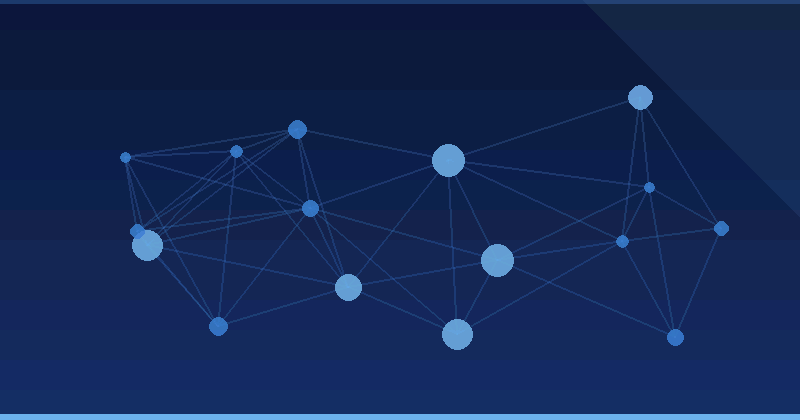
Instead of relying on a single large language model prompt to parse unstructured inputs, execute calculations, verify constraints, and generate reports, a multi agent system distributes these responsibilities. The orchestrator agent acts as a project manager, receiving the initial request and delegating sub-tasks to worker agents. When worker agents complete their tasks, they return results to the orchestrator for integration or pass them directly to the next agent in the pipeline.
How Do Specialized Roles Improve Automation?
Specialization is the core engine behind multi agent architectures. When you assign narrow, well-defined scopes to individual agents, you drastically improve output quality and reduce hallucinations. A general-purpose prompt often struggles when forced to write code, format JSON schemas, and ensure compliance guidelines simultaneously. Splitting these duties allows developers to apply specific system prompts, temperature settings, and tool access parameters to each agent.
- Assign strict system prompts tailored to a single capability for each agent.
- Restrict tool access so that data-fetching agents cannot alter production databases.
- Implement verification loops where a critique agent reviews output from a generator agent.
- Maintain clear communication protocols using structured JSON payloads between agent hops.
Consider a content generation pipeline for a digital marketing team. One agent researches trending industry topics based on RSS feeds. A second agent drafts the article outline based on brand guidelines. A third agent writes the actual prose, and a fourth agent reviews the text for policy compliance and formatting consistency. This division keeps the cognitive load low for each individual model call, resulting in higher adherence to complex parameters.
Why Do Monolithic Prompts Fail at Complex Tasks?
Monolithic prompts attempt to pack all instructions, contexts, tools, and output constraints into a single request. As task complexity grows, this approach hits severe token limits and attention degradation walls. When a model must remember database schemas, copywriting guidelines, formatting rules, and historical user preferences all at once, performance drops sharply on the later instructions in the prompt. Multi agent architectures solve this by isolating context windows.
In a typical account management workflow, a monolithic script might time out or lose track of intermediate variables when processing hundreds of customer support tickets. By dividing the workload across specialized agents, the system preserves context cleanly. The ticket-parsing agent only needs the raw email text. The knowledge-base-search agent only needs the extracted query string. The response-generation agent only needs the retrieved documentation snippets and the customer history.
How Do Agents Communicate and Coordinate?
Communication protocols determine how effectively a multi agent system performs its overall mission. Developers typically choose between centralized orchestration and decentralized peer-to-peer messaging. In centralized setups, a master router evaluates every message and decides which agent takes the next turn. This approach provides predictable execution flow and easier debugging when errors occur during execution.
Decentralized architectures allow agents to broadcast messages to a shared event bus or blackboard. Agents listen for specific topics or keywords relevant to their specialty and pick up tasks autonomously. While decentralized systems offer higher resilience and scalability for dynamic environments, they introduce debugging challenges and require careful state management to prevent infinite loops where two agents pass the same task back and forth indefinitely.
What Are the Main Architectural Patterns?
Architectural patterns guide how you structure agent interactions for specific business domains. The hierarchical pattern resembles a traditional corporate management structure, where a director agent delegates to manager agents, who in turn manage worker agents. This pattern works well for structured reporting and predictable multi-step workflows like invoice processing or software deployment pipelines.
- Hierarchical Pattern: Director delegates to managers and workers for predictable workflows.
- Sequential Pipeline Pattern: Agents pass output linearly from one specialist to the next.
- Collaborative Blackboard Pattern: Agents read and write to a shared data state dynamically.
- Competitive Critique Pattern: Generator and validator agents iterate until quality thresholds are met.
Another common pattern is the sequential pipeline, where data moves in a straight line through preprocessing, analysis, transformation, and storage agents. For iterative tasks like code refactoring or copywriting, the competitive critique pattern proves effective. One agent generates the initial artifact, a second agent checks it against strict validation rules, and the first agent receives the feedback to generate a revised version.
How to Handle State Management and Error Recovery
State management separates stable multi agent deployments from fragile experimental scripts. Because agents execute across multiple turns and tool calls, maintaining a persistent transaction log is necessary. If an agent fails to call an external API or returns malformed JSON, the orchestrator needs enough state context to retry the specific step without restarting the entire workflow from scratch.
Error recovery mechanisms should include fallback prompts, circuit breakers for failing external tools, and human-in-the-loop escalation triggers. When confidence scores drop below a predefined threshold, the system should pause execution and route the task to a human reviewer dashboard. This prevents runaway loops where an agent continuously generates incorrect API calls or invalid database queries.
How Alien Road Applies Multi Agent Systems
At Alien Road, engineering teams build custom multi agent architectures to automate complex data integration and content generation pipelines for enterprise clients. A typical engagement begins with a discovery phase where analysts map out the client manual workflows, identifying bottlenecks in data processing and multi-step reporting tasks.
Following discovery, the technical team designs a specialized agent network tailored to the client infrastructure. For example, in an e-commerce catalog enrichment project, one set of agents ingests raw supplier feeds, another agent normalizes attribute data against standard taxonomies, and a final validation agent ensures SEO compliance before pushing updates to the staging database. This structured approach cuts manual processing time significantly while maintaining strict data quality standards.
Where to Start This Week
Begin your multi agent journey by identifying a single, repetitive multi-step workflow in your internal operations that currently requires manual handoffs between team members. Map out the exact inputs, transformation rules, and output requirements for each step of that process.
Next, write a basic two-agent proof of concept using a lightweight orchestration script. Assign a generation role to the first agent and a validation role to the second agent. Test the pipeline with a small batch of inputs, monitor token usage and error rates, and gradually introduce more specialized agents as your architecture proves its reliability.
Keep reading: AI Optimization · AI Optimization