
A good Google Ads click through rate is a metric that depends heavily on your industry, ad placement, and the specific intent behind your keywords. Rather than chasing a single universal percentage, successful advertisers evaluate their performance by comparing their current click through rate against their own historical data and specific campaign goals. A strong click through rate indicates that your ad copy and creative are resonating well with your target audience, which helps to improve your overall Quality Score within the platform.
Why does Google Ads click through rate matter?
The click through rate, commonly abbreviated as CTR, serves as a primary indicator of how relevant your advertisements are to the people who see them. When users consistently click on your ads, Google identifies your content as valuable, which can lead to better ad positions and lower costs per click over time. In a typical account, this metric acts as a feedback loop. High engagement signals that your message matches the user query, while low engagement often suggests that your ad copy needs adjustment or your keyword targeting is too broad for the audience you want to reach.
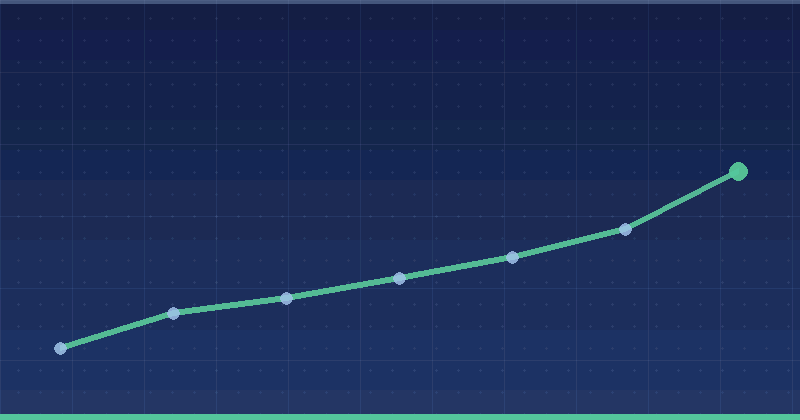
Monitoring this metric is essential for budget management. If you spend your daily budget on ads that do not generate clicks, you lose the opportunity to convert those users into customers. By focusing on steady improvements rather than instant perfection, you can refine your campaigns to reach the right people at the right time. Alien Road uses this data to identify which ad variations perform best, allowing for a more deliberate approach to budget allocation and keyword bidding strategies across various client accounts.
What factors influence your click through rate?
Several elements directly impact the likelihood of a user clicking your ad. First, the relevance of your ad copy to the keyword entered by the user is critical. If someone searches for ‘waterproof hiking boots’ and your ad highlights ‘durable outdoor footwear,’ the connection is clear and direct. If your ad talks about ‘general sports shoes,’ the click through rate will likely suffer because the user feels the ad does not address their specific need.
Your ad extensions also play a role in how your advertisement appears on the search results page. Using sitelinks, callouts, and structured snippets can make your ad occupy more screen space, making it more noticeable to potential customers. Additionally, your position on the page matters. Ads appearing at the very top of the search results often see higher engagement than those at the bottom of the page, simply due to visibility. Adjusting your bids or improving your ad relevance can help you reach these higher positions.

How can you improve your Google Ads performance?
Improving your click through rate requires a structured approach to testing and optimization. You should look at your account through the lens of user intent. Are your keywords too generic? If you are bidding on broad terms, consider moving toward more specific long-tail keywords that signal a clearer purchase intent. This refinement often leads to a more engaged audience that is more likely to click on your ad content.
- Audit your negative keyword lists to prevent your ads from appearing for irrelevant search queries.
- A/B test your ad headlines and descriptions to see which calls to action generate more interest.
- Implement ad extensions to provide more information and increase your ad presence on the search page.
- Review your landing page alignment to ensure the user experience matches the promise of the ad copy.
- Refine your target audience settings to focus on regions or demographics that show the highest interest.
Comparison of ad engagement drivers
| Factor | Primary Influence | Action Required |
|---|---|---|
| Keyword Match | Relevance | Review search terms |
| Ad Extensions | Visibility | Enable all relevant assets |
| Ad Position | Exposure | Adjust bid strategy |
| Call to Action | User Intent | Update ad headlines |
How Alien Road applies performance analysis
At Alien Road, we focus on a systematic process to maintain healthy performance metrics. We begin by analyzing the current search terms report to ensure that our clients are not wasting budget on irrelevant traffic. By identifying search terms that trigger ads but fail to lead to clicks, we can add these as negative keywords. This keeps the account focused on high-intent searches. We then perform iterative testing on ad headlines, ensuring that the primary value proposition is clear within the first few words of the ad.
Our team monitors account health daily to spot any sudden drops in performance. For example, if a high-performing campaign experiences a dip, we check for changes in competitor activity or shifts in seasonal search demand. Instead of making drastic changes, we rely on gradual adjustments to bidding and targeting. This allows our clients to see consistent results without the volatility often associated with frequent, large-scale campaign overhauls. We view each account as a unique case requiring specific attention to detail and a commitment to data-driven refinement.
What is the role of Quality Score?
Quality Score is a diagnostic tool provided within the Google Ads interface that estimates the quality of your ads, keywords, and landing pages. A higher Quality Score typically leads to lower costs and better ad positions. While Google does not use Quality Score as a direct ranking factor in the auction, it is a key component of how your ad rank is calculated. Improving your click through rate is one of the most effective ways to influence this score positively over time.
When your keywords have a high expected click through rate, it tells Google that your ad is useful to users. You can find these insights by looking at the ‘Keywords’ tab in your Google Ads account and checking the columns for ‘Expected CTR,’ ‘Ad Relevance,’ and ‘Landing Page Experience.’ Focusing on these three areas provides a clear roadmap for optimization. If your expected CTR is below average, it is time to revisit your ad copy and ensure it aligns better with the user’s search query.
How to track your progress effectively?
Effective tracking requires a disciplined approach to reporting. You should establish a baseline for your performance and track how your changes affect that baseline over time. Avoid looking at short-term fluctuations, such as daily or even weekly changes, as these can be misleading due to natural variations in traffic. Instead, look at performance trends over a 30-day period. This gives you a broader view of whether your optimizations are truly having the desired impact on your click through rate.
- Export your campaign data to a spreadsheet to identify long-term trends.
- Set up custom alerts in the Google Ads platform to notify you of significant performance drops.
- Compare your current period performance to the same period in the previous year to account for seasonality.
- Use the ‘Segment’ feature in your dashboard to view performance by device or time of day.
- Review your landing page conversion rates alongside CTR to ensure you are attracting the right traffic.
Where to start this week?
Start your optimization by conducting a thorough search term report audit. Go to the ‘Insights & reports’ menu in your Google Ads account and select ‘Search terms.’ Filter the list by impressions to see which queries are triggering your ads most often. Identify any terms that do not align with your business goals and add them as negative keywords. This simple step can immediately improve your relevance and potentially increase your click through rate by removing traffic that was never likely to engage with your ad.
Next, evaluate your top three performing ads. Identify the common elements in their headlines and descriptions. Are they using a specific offer, a strong call to action, or a clear benefit statement? Apply these successful elements to the ads that are currently underperforming. By testing these changes on a small scale, you can gather information on what drives interest for your specific audience. Repeat this process regularly to keep your campaigns fresh and responsive to user needs.
Frequently Asked Questions
Should I pause ads with a low click through rate?
Not necessarily. Before pausing an ad, check if it is still generating conversions at an acceptable cost. Sometimes an ad may have a low click through rate but a high conversion rate, meaning it reaches a very specific audience. If an ad has low clicks and zero conversions, it is a good candidate for pausing or significant revision.
Does a high click through rate always mean more sales?
A high click through rate means more traffic, but it does not guarantee sales. Your landing page must be relevant and persuasive to convert that traffic into customers. If you have high clicks but low conversions, the issue likely lies with your website content or your offer rather than the ad itself.
How long should I wait to see results from changes?
You should generally wait at least two weeks before evaluating the impact of major changes to your ads or keywords. This period allows the Google Ads algorithm to adjust to the new settings and gather enough data to provide a statistically meaningful reflection of how your new strategy is performing in the auction.
Do branded keywords have a higher click through rate?
Yes, ads targeting your own brand name typically see a higher click through rate. Users searching for your specific company are already familiar with your brand and are more likely to engage with your search result. This is a common pattern in most accounts and should be viewed separately from your non-branded, generic keyword campaigns.
Keep reading: Google Advertising · Advertising