
RAG, or Retrieval-Augmented Generation, connects large language models to external data sources to ground AI responses in specific, factual information. While standard RAG retrieves individual document chunks based on semantic similarity, Graph RAG uses knowledge graphs to map relationships between entities, improving retrieval accuracy for complex, multi-hop queries. This fundamental difference determines how well an AI system understands connections across disparate pieces of information within your business knowledge base.
What is standard RAG?
Standard RAG functions by converting your internal documents into vector embeddings. When a user asks a question, the system performs a similarity search to find the most relevant snippets of text. These snippets are then fed to the language model to generate an answer. It works effectively for direct questions where the answer exists in a single, well-defined paragraph. However, this method often struggles when a query requires synthesizing information from across many different documents or when the context is buried in subtle, non-textual relationships.
Consider a scenario where a marketing team needs to analyze customer sentiment across years of support tickets. A basic vector search might pull up a single ticket about a refund, but it fails to see the broader trend connecting that refund to a specific product release or a recurring shipping issue. The limitation here is the lack of structural awareness. The model sees the text, but it does not see the underlying connections between the product, the customer, and the specific failure points.
How does Graph RAG improve retrieval?
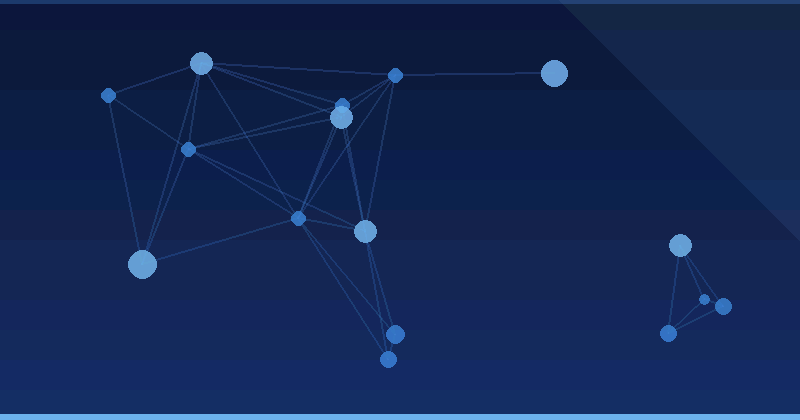
Graph RAG changes the approach by incorporating a knowledge graph into the retrieval process. A knowledge graph stores information as a network of nodes and edges, where nodes represent entities like products or employees, and edges represent the specific relationships between them. This structure allows the system to follow paths across data that are not explicitly stated in a single sentence. For example, if a user asks about the impact of a specific vendor on project delays, the system can traverse the graph to find the connection between the vendor, the specific project, and the documented delays without needing a single document that summarizes that entire chain.
This methodology is particularly effective for complex, multi-hop queries that require the AI to piece together disparate facts. By mapping these relationships, the AI gains a more comprehensive view of the subject matter. It effectively bridges the gap between raw data storage and meaningful insights, allowing the model to answer queries that rely on the broader context of your organization’s data ecosystem.
Key differences in implementation
Building a vector-based RAG system is often the first step because it is relatively straightforward to implement using standard document processing pipelines. You simply chunk your text, generate embeddings, and store them in a vector database. Conversely, Graph RAG requires more effort in the initial setup, as it involves entity extraction and relationship mapping to populate the graph.
- Standard RAG: Relies on vector similarity, fast to deploy, performs best for direct fact retrieval.
- Graph RAG: Relies on structured relationships, requires more setup, performs best for complex, cross-document reasoning.
- Data requirements: RAG works with unstructured text; Graph RAG needs identified entities and explicit links.
- Maintenance: Graph RAG needs constant updates to the relationship schema as the business evolves.
When should you choose Graph RAG over standard RAG?
Deciding between these two depends on the complexity of your data and the types of questions your team asks. If your documentation consists of isolated manuals or simple FAQ pages, standard RAG is usually sufficient. It provides high speed with minimal maintenance, which is ideal for simple customer-facing bots or internal knowledge search tools.
However, if you are operating in a domain where information is deeply interconnected, Graph RAG becomes a necessity. For example, in legal research, medical diagnostics, or complex supply chain management, the ability to trace dependencies is vital. If your current AI setup frequently fails to connect the dots on multi-part inquiries, it is a clear signal that the underlying vector search lacks the structural depth needed to handle your specific information architecture.
How Alien Road applies Graph RAG
At Alien Road, we follow a structured process when evaluating whether a client needs a graph-enhanced retrieval system. We start with a data audit to determine if the existing information can be effectively mapped into a graph. This involves identifying key entities that drive the business, such as product lines, customer segments, and service history. We then test the system against a set of complex, multi-hop queries that represent typical user behavior.
For a typical engagement, we begin by implementing a hybrid approach. We run standard vector search alongside a graph traversal component to see where the accuracy gains are most significant. We then fine-tune the graph schema to ensure the most relevant relationships are prioritized during the retrieval phase. This allows us to maintain the efficiency of vector search while gaining the reasoning capabilities of a knowledge graph.
What are the common challenges with Graph RAG?
- Knowledge Graph construction: Accurately extracting entities from messy, unstructured text is technically demanding.
- Scalability concerns: Large graphs can become slow to query if the relationship network is too dense.
- Schema design: Creating an effective graph structure requires deep knowledge of how the business data relates.
- Integration costs: Balancing the cost of graph database hosting against the performance benefits.
How to get started with your AI architecture
Start by identifying the top five questions your team or customers struggle to get accurate answers for using your current AI tools. Analyze whether these questions require pulling data from multiple disconnected sources or if they rely on a single document. If you find that the answers require synthesizing information that spans across different departments or technical systems, start planning a pilot program using a small, well-defined subset of your data.
This week, map out the primary entities and the relationships between them that matter most to your business goals. For example, if you manage a project management tool, your entities might include users, tasks, deadlines, and project owners. By defining these relationships now, you create a foundation for a graph structure. Once the relationships are clear, look for tools that allow you to experiment with basic graph-based retrieval to see if it improves the quality of your AI-generated responses.
Keep reading: AI Optimization · AI Optimization