Wednesday, September 21, 2016
Here is our list of the top 8 things to consider when helping your clients AMPlify their websites
(and staying ahead of their curiosity!) after our
announcement to expand support for
Accelerated Mobile Pages.
Getting started can be simple
If a site uses a popular
Content Management System (CMS), getting AMP
pages up and running is as straightforward as installing a plug-in. Sites that use custom HTML or
that are built from scratch will require additional development resources.
Not all types of sites are suitable
AMP is great for all types of static web content such as news, recipes, movie listings, product
pages, reviews, videos, blogs and more. AMP is less useful for single-page apps that are heavy on
dynamic or interactive features, such as route mapping, email or social networks.
You don’t have to #AMPlify the whole site
Add AMP to a client’s existing site progressively by starting with simple, static content pages
like articles, products, or blog posts. These are the “leaf” pages that users access through
platforms and search results, and could be simple changes that also bring the benefits of AMP to
the website. This approach allows you to keep the home page and other “browser” pages that might
require advanced, non-AMP dynamic functionality.
If you’re creating a new, content-heavy website from scratch, consider building the whole site
with AMP from the start. To begin with, check out the
getting started guidelines.
The AMP Project is open source and still evolving
If a site’s use case is not supported in the AMP format yet, consider filing a
feature request on GitHub, or you could
even design a component yourself.
AMP pages might need to meet additional requirements to show up in certain places
In order to appear in Google’s search results, AMP pages need only be
valid AMP HTML. Some products integrating AMP
might have further requirements than the AMP validation. For example, you’ll need to mark up your
AMP pages as
Article markup with
Structured Data to make them eligible for the
Google Top Stories section.
There is no ranking change on Search
Whether a page or site has valid and eligible AMP pages has no bearing on the site’s ranking on
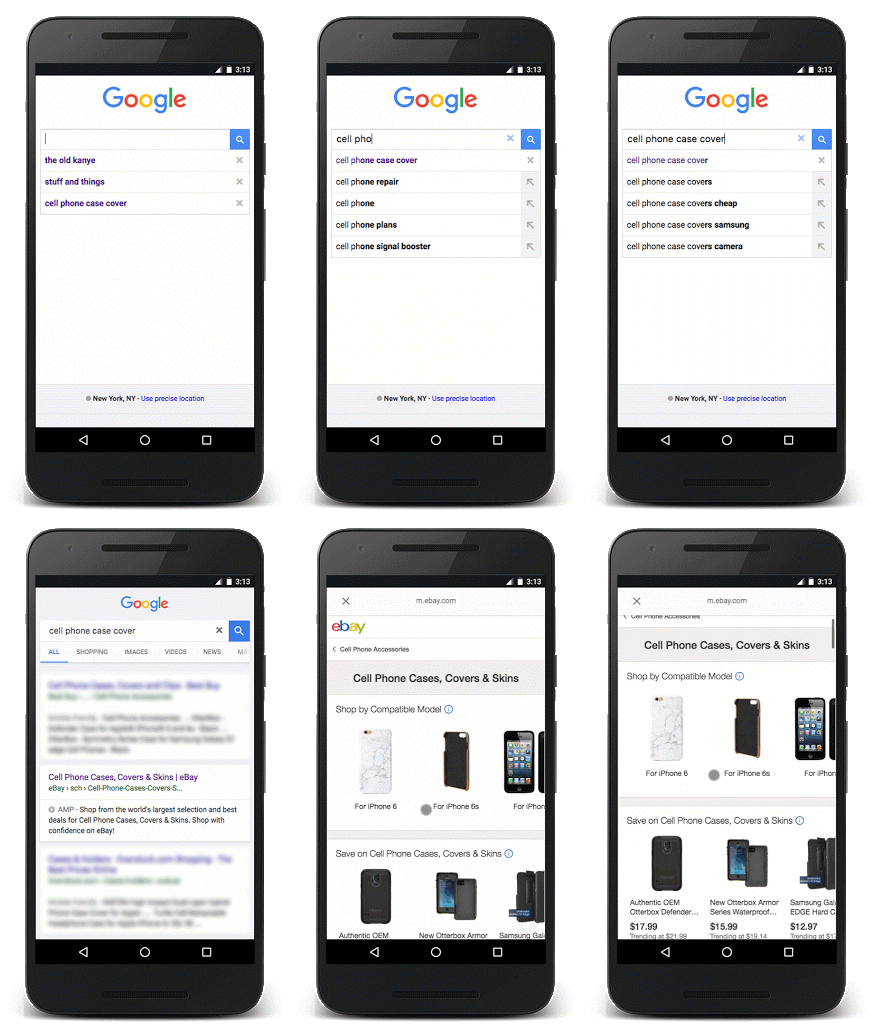
the Search results page. The difference is that web results that have AMP versions will be labeled
with an

icon.
AMP on Google is expanding globally
AMP search results on Google will be rolling out worldwide when it launches in the coming weeks.
The Top Stories carousel which shows newsy and
fresh AMP content is already available in a number of countries and languages.
Help is on hand
There’s a whole host of useful resources that will help if you have any questions:
- Webmasters Help Forum: Ask questions about
AMP and Google’s implementation of AMP - Stack Overflow: Ask technical questions
about AMP - GitHub: Submit a feature request or
contribute
What are your top tips to #AMPlify pages? Let us know in the comments below or on our
Google Webmasters Google+ page. Or as usual,
if you have any questions or need help, you can post in our
Webmasters Help Forum.
How we apply this
Google announcements age. We keep this post here for the record, and we note for clients whether the behaviour it describes still applies today or has since been superseded.
Related services