In der Vergangenheit waren Sie beim Erstellen einer Website oder Web-App weitgehend auf einige wenige ausgewählte „websichere“ Schriften wie Times und Arial beschränkt. Wenn Sie von diesen Schriften abwichen, mussten Sie Adobe Flash verwenden oder Text in Bildern einbetten, was eine ganz Reihe neuer Kompromisse mit sich brachte. Zum Beispiel sind Bilder nicht semantisch, können nicht automatisch in andere Sprachen übersetzt werden und können eine viel größere Dateigröße als Text haben. Darüber hinaus kann Text in Bildern nicht in die Zwischenablage eines Benutzers kopiert, mit Screenreadern gelesen oder von Suchmaschinen leicht indexiert werden.
Die gute Nachricht ist, mit
Google Web Fonts
ist es jetzt möglich, Hunderte von websicheren Schriften auf Ihren Webseiten zu verwenden.
Im vergangenen Mai eingeführt
,
ermöglicht es Ihnen Google Web Fonts, einfach die Schrift(en) auszuwählen, die Sie auf Ihrer Webseite, Ihrem Blog oder Ihrer Web-App verwenden möchten, und das HTML- und CSS-Snippet einzubinden. In etwa 30 Sekunden können Sie wunderschöne Schriften auf Ihren Seiten haben, die in der großen Mehrheit der beliebtenmodernen Webbrowser
korrekt dargestellt werden. Sie müssen keine Bilder oder Flash mehr verwenden, um die Schrift Ihrer Wahl einzubinden.Im Gegensatz zu Times und Arial, die Verweise auf auf dem lokalen Rechner eines Benutzers installierte Schriften sind, werden Webfonts über eine Browseranfrage bereitgestellt (ähnlich wie ein Bild bereitgestellt würde). Das bedeutet, dass Sie jeden Webfont auf den Rechner eines Benutzers übertragen können. Benutzer werden begeistert sein, wenn sie merken, dass sich diese Schriften genau wie jeder andere Text in Arial verhalten.
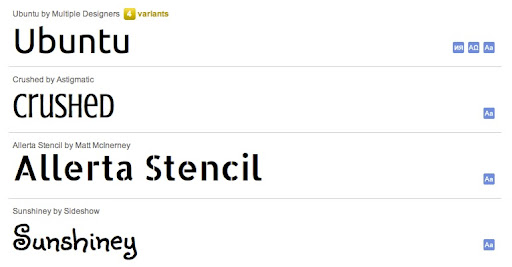
Die Einführung der Webfont-Technologie verlief rasant. Google Web Fonts bedient mittlerweile grob 50 Millionen tägliche Anfragen[1] auf rund 800.000 einzigartigen Websites[2] und wächst monatlich um etwa 30 %. Hier bei Google freuen wir uns über das Potenzial von Webfonts, das Gefüge des Webs zu verändern. Schöne Typografie macht das Web angenehmer zu浏览, ausdrucksstark und interessant.
Auf ein schönes Web!
Verfasst von David Wurtz, Product Manager, Google Web Fonts
[2] Wir zählen eine einzigartige Website als eindeutige Domains, mit der Ausnahme, dass “www”-Subdomains nicht gezählt werden. Beispielsweise würden www.myblog.com und myblog.com als eine Domain zählen. Sam.myblog.com und sally.myblog.com würden jedoch als zwei Domains zählen.
Jenseits von Times und Arial – Die neuen Websicheren Schriften | Alien Road
So setzen wir das um
Google announcements age. We keep this post here for the record, and we note for clients whether the behaviour it describes still applies today or has since been superseded.
Verwandte Leistungen