Thursday, December 21, 2006
SES Chicago
was wonderful. Meeting so many of you made the trip absolutely perfect. It was as special as if
(Chicago local)
Oprah had joined
us!

While hanging out at the Google booth, I was often asked about how to take advantage of our
Webmaster Tools.
For example, here’s one tip on Common Words.
Common Words: Our prioritized listing of your site’s content
The common words feature lists in order of priority (from highest to lowest) the prevalent
words we’ve found in your site, and in links to your site. (This information isn’t available for
subdirectories or subdomains.) Here are the steps to leveraging common words:
- Determine your website’s key concepts. If it offers getaways to a cattle ranch in Wyoming, the
key concepts may be “cattle ranch,” “horseback riding,” and “Wyoming.” - Verify that Google detected the same phrases you believe are of high importance. Login to
Webmaster Tools, select your
verified site,
and choose Page analysis from the Statistics tab. Here, under “Common words in
your site’s content,” we list the phrases detected from your site’s content in order of
prevalence. Do the common words lack any concepts you believe are important? Are they listing
phrases that have little direct relevance to your site?If you’re missing important phrases, you should first review your content. Do you have
solid, textual information that explains and relates to the key concepts of your site? If
in the cattle-ranch example, “horseback riding” was absent from common words, you may then
want to review the “activities” page of the site. Does it include mostly images, or only
list a schedule of riding lessons, rather than conceptually relevant information?It may sound obvious, but if you want to rank for a certain set of keywords, but we don’t
even see those keyword phrases on your website, then ranking for those phrases will be
difficult.- When you see general, non-illustrative common words that don’t relate helpfully to your
site’s content (for example, a top listing of “driving directions” or “contact us”), then it
may be beneficial to increase the ratio of relevant content on your site. (Although don’t be
too worried if you see a few of these common words, as long as you also see words that are
relevant to your main topics.) In the cattle ranch example, you would give visitors “driving
directions” and “contact us” information. However, if these general, non-illustrative terms
surface as the highest-rated common words, or the entire list of common words is only these
types of terms, then Google (and likely other search engines) could not find enough “meaty”
content. - If you find that many of the common words still don’t relate to your site, check out our
blog post on
unexpected common words.
- Here are a few of our favorite posts on improving your site’s content:
- Should you decide to update your content, please keep in mind that we will need to recrawl your
site in order to recognize changes, and that this may take time. Of course, you can notify us of
modifications by
submitting a Sitemap.
Happy holidays from all of us on the Webmaster Central team!
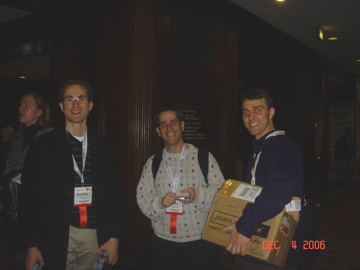
SES Chicago: Googlers Trevor Foucher, Adam Lasnik and Jonathan Simon
How we apply this
Google announcements age. We keep this post here for the record, and we note for clients whether the behaviour it describes still applies today or has since been superseded.
Related services