
GraphRAG vs RAG represents the primary choice for businesses looking to improve how their AI systems retrieve and process information. While standard Retrieval-Augmented Generation (RAG) relies heavily on vector search to find similar documents, GraphRAG combines vector search with knowledge graphs to map specific relationships between data points. This approach allows systems to answer complex queries that require connecting the dots across a large dataset rather than just identifying keywords or semantic similarity in isolated chunks of text.
What is the core difference between RAG and GraphRAG?
Standard RAG functions by converting text into numerical vectors. When a user asks a question, the system searches these vectors for the most relevant document segments. This method works well for specific, factual questions where the answer exists in a single location. However, it often misses the bigger picture when an answer requires understanding the connection between disparate pieces of information. It acts like a librarian finding a specific book but failing to notice how the characters in that book relate to another volume on a different shelf.
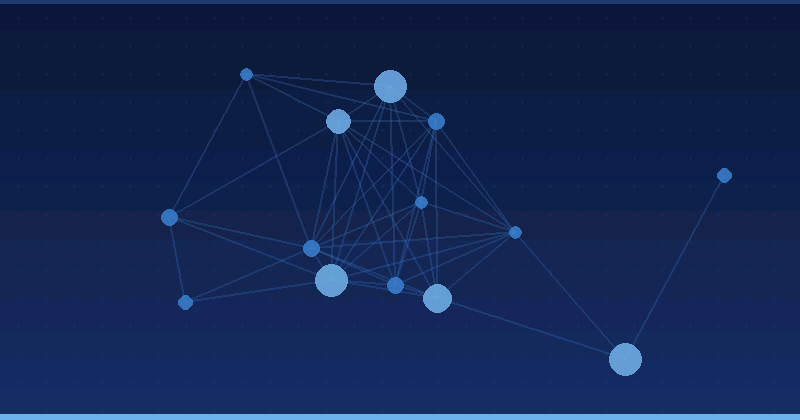
GraphRAG adds a structured layer to this process by building a knowledge graph. A knowledge graph stores entities and the relationships between them, creating a network of facts. By linking the vector retrieval process with this graph, the system can traverse paths between related entities. If a query asks about the impact of a specific supply chain disruption on several regional branches, GraphRAG can identify all affected entities because they are nodes connected within the same graph structure. This creates a much higher density of contextual awareness for the underlying model.
When should you choose RAG for your data?
Choosing between these two approaches depends largely on your data structure and query complexity. RAG is generally faster to implement and requires less computational overhead. If your business needs to search through simple, flat documents like product manuals, standard policy updates, or basic FAQs, RAG often delivers sufficient results with minimal maintenance. It avoids the complexity of building and maintaining a knowledge graph, making it a solid starting point for many organizations.
A typical account managing a high volume of static support tickets can often achieve high accuracy with a simple vector search implementation. Because the data is usually self-contained and does not require cross-referencing external entities, the added complexity of a graph structure may not yield a proportional increase in query performance. You should stick to standard RAG when your primary goal is to provide fast, document-specific answers without needing to map complex internal relationships.
Why is GraphRAG better for complex relationships?
GraphRAG is specifically designed for scenarios where the context is hidden in the links between data. In large enterprises, information is often fragmented across departments, project logs, and historical databases. Standard RAG may return fragments of these reports, but it will not see that a decision made by the marketing team in March influenced the budget constraints of the engineering team in July. The graph approach keeps these entities linked.
- Identifies indirect relationships that vector search might ignore.
- Provides a clear map of how different business units or entities interact.
- Reduces hallucinations by grounding answers in explicit graph connections.
- Allows for reasoning over broad data sets that span across time or departments.
How does the implementation process differ?
Implementing RAG primarily involves choosing an embedding model and a vector database. You process your documents, chunk them, and store them in the index. The workflow is straightforward: ingest, embed, and query. This is a common pattern for teams that need to deploy an AI-assisted search tool within a few weeks using existing cloud-based infrastructure.
GraphRAG requires an additional layer of data engineering. You must first extract entities and their relationships from your source material. This involves defining an ontology that outlines what types of entities (e.g., people, products, locations) and relationships (e.g., manages, produces, located_in) matter to your business. This setup phase takes longer but pays off when your queries require multi-step reasoning that a simple vector search cannot reliably perform.
How Alien Road applies GraphRAG solutions
At Alien Road, we follow a specific process when evaluating whether a client needs to transition from standard RAG to GraphRAG. In a typical engagement, we begin by analyzing the query logs. If we see a high rate of questions that require synthesizing data from different document types, we recommend a graph-based approach. We start by building a small-scale knowledge graph centered on the client’s most critical business entities to prove the concept before full integration.
- Audit current data retrieval success rates to identify gaps in context.
- Map key business entities and their relationships to define the graph structure.
- Build a pilot graph using a subset of high-value internal documentation.
- Run comparative tests between vector-only and graph-integrated queries.
- Monitor the accuracy of synthesis results to adjust entity weighting.
What are the common challenges with GraphRAG?
The biggest challenge with GraphRAG is the maintenance of the knowledge graph. As your business data changes, the graph must be updated to reflect new relationships. If you add a new product line or change your organizational structure, your graph extraction logic needs to account for these shifts. Unlike standard RAG, where you simply re-index new documents, graph maintenance involves ensuring the new information fits correctly into the existing network of entities.
Another issue is the computational cost of graph traversal during query time. Searching a large, complex graph is more resource-intensive than performing a similarity search in a vector database. You must optimize your retrieval pipeline to ensure that the AI model receives the relevant graph paths without triggering high latency. A common pattern is to combine local vector search with focused graph retrieval to balance speed and accuracy.
Where to start this week
Start by identifying your most complex queries. Select ten questions from your users that your current AI setup fails to answer correctly because it lacks the necessary context. Determine if those questions require connecting data points that are stored in separate silos. If the answer is yes, you have a strong candidate for GraphRAG. Map out the entities involved in these questions and consider how a graph could link them together. By focusing on these specific use cases, you can build a solid foundation for more intelligent AI interactions without over-engineering your entire data stack.
Keep reading: AI Optimization · AI Optimization