Mercredi 3 décembre 2014
reCAPTCHA protège les sites Web que vous aimez contre le spam et les abus. Ainsi, lorsque vous naviguez en ligne — disons pour faire des achats de fêtes de dernière minute — vous n’avez pas à concurrencer des robots et des scripts abusifs pour accéder aux sites. Pendant des années, nous avons invité les utilisateurs à confirmer qu’ils ne sont pas des robots en leur demandant de lire du texte déformé et de le taper dans une case, comme ceci :

Mais nous avons pensé qu’il serait plus simple de demander directement à nos utilisateurs s’ils sont ou non des robots — c’est ce que nous avons fait ! Nous avons commencé à déployer une nouvelle API qui simplifie radicalement l’expérience reCAPTCHA. Nous l’appelons le “No CAPTCHA reCAPTCHA” et voici à quoi cela ressemble :
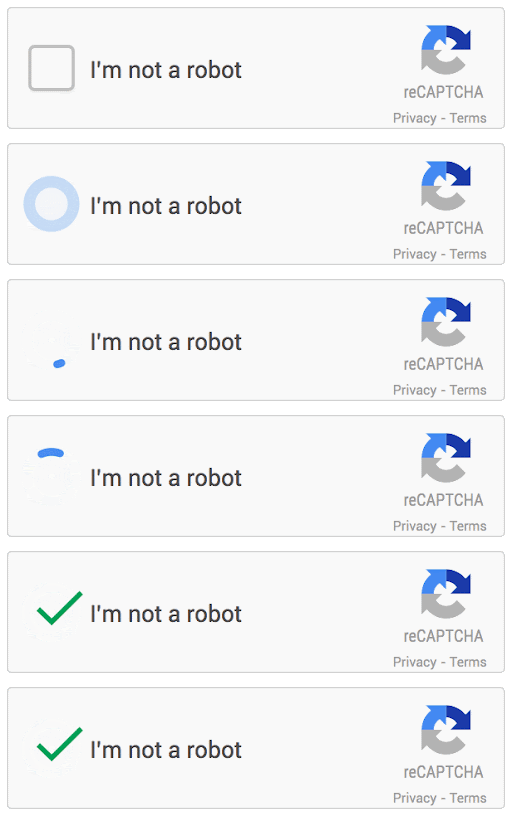
Sur les sites Web utilisant cette nouvelle API, un nombre important d’utilisateurs pourront vérifier en toute sécurité et facilement qu’ils sont humains sans avoir à résoudre réellement un CAPTCHA. Au lieu de cela, en un seul clic, ils confirmeront qu’ils ne sont pas un robot.
Bien que la nouvelle API reCAPTCHA puisse sembler simple, il y a un haut degré de sophistication derrière cette modeste case à cocher. Les CAPTCHAs se sont longtemps appuyés sur l’incapacité des robots à résoudre du texte déformé. Cependant,
nos recherches ont récemment montré
que la technologie d’intelligence artificielle d’aujourd’hui peut résoudre même la variante la plus difficile de texte déformé avec une précision de 99,8 %. Ainsi, le texte déformé, en soi, n’est plus un test fiable.
Pour contrer cela, l’année dernière, nous avons
développé
un backend d’analyse avancée des risques pour reCAPTCHA qui prend activement en compte l’engagement global d’un utilisateur avec le CAPTCHA — avant, pendant et après — pour déterminer si cet utilisateur est un humain. Cela nous permet de dépendre moins de la saisie de texte déformé et, par conséquent, d’offrir une meilleure expérience aux utilisateurs. Nous en avons parlé dans notre
article de la Saint-Valentin
au début de cette année.
La nouvelle API est la prochaine étape de cette évolution constante. Désormais, les humains peuvent simplement cocher la case et, dans la plupart des cas, ils ont réussi le défi.
Êtes-vous sûr de ne pas être un robot ?
Cependant, les CAPTCHAs ne vont pas disparaître tout de suite. Dans les cas où le moteur d’analyse des risques ne peut pas prédire avec certitude si un utilisateur est un humain ou un agent abusif, il affichera un CAPTCHA pour obtenir plus d’indices, augmentant le nombre de points de contrôle de sécurité pour confirmer que l’utilisateur est valide.

Cette nouvelle API nous permet également d’expérimenter de nouveaux types de défis plus faciles à utiliser pour nous les humains, en particulier sur les appareils mobiles. Dans l’exemple ci-dessous, vous pouvez voir un CAPTCHA basé sur un classique
Computer Vision
problème d’étiquetage d’images. Dans cette version du défi CAPTCHA, il vous est demandé de sélectionner toutes les images qui correspondent à l’indice. Il est beaucoup plus facile de toucher des photos de chats ou de dindes que de taper péniblement une ligne de texte déformé sur votre téléphone.


L’adoption de la nouvelle API sur votre site
Au fur et à mesure que de plus en plus de sites Web adopteront la nouvelle API, un plus grand nombre de personnes verront des “No CAPTCHA reCAPTCHAs”. Les premiers adoptants, tels que Snapchat,
WordPress,
Humble Bundleet plusieurs autres obtiennent déjà d’excellents résultats avec cette nouvelle API. Par exemple, au cours de la semaine dernière, plus de 60 % du trafic de WordPress et plus de 80 % du trafic de Humble Bundle sur reCAPTCHA ont rencontré l’expérience No CAPTCHA — les utilisateurs sont arrivés sur ces sites plus rapidement. Pour adopter le nouveau reCAPTCHA pour votre site Web,
visitez notre site
pour en savoir plus.
Humains, nous poursuivrons notre travail pour garder Internet sûr et facile à utiliser. Bots et scripts abusifs, cela ne va faire qu’empirer — désolés de ne pas être désolés (toujours).
Comment nous l'appliquons
We archive Search Central announcements because client questions often trace back to a change that was announced years ago. Reading the original is faster than reconstructing it from second-hand summaries.
Services associés