mercredi 8 septembre 2010
Webmasters, vous remarquerez peut-être certains changements dans vos données de
Search queries
en raison du lancement de
Google Instant. Avec Google Instant, la page se met à jour dynamiquement pour afficher les résultats correspondant à la meilleure complétion de ce que l’utilisateur a tapé. Cela signifie que les gens peuvent voir et visiter votre site web beaucoup plus rapidement qu’avant, et souvent sans cliquer sur le bouton de recherche ou appuyer sur « Entrée ».
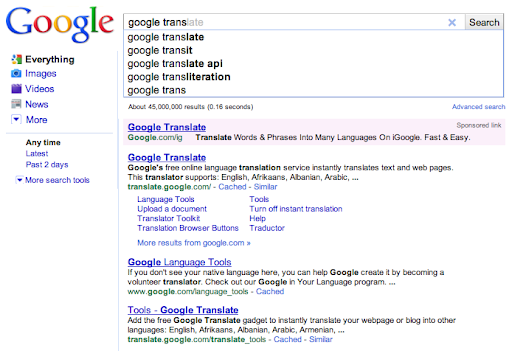
Bien que la présentation des résultats de recherche puisse changer, notre conseil le plus important aux webmasters reste le même : les utilisateurs veulent visiter des pages avec un contenu captivant et une excellente expérience utilisateur.
Avec Google Instant, vous remarquerez peut-être une augmentation des
impressions
car votre site apparaîtra dans les résultats de recherche au fur et à mesure que les utilisateurs tapent.
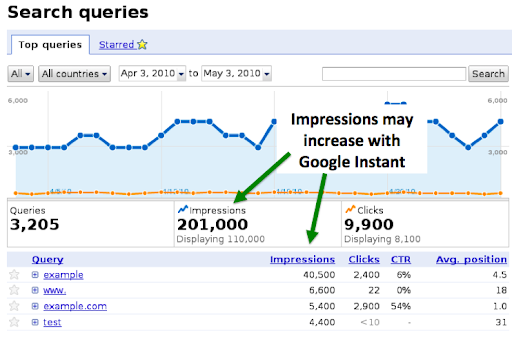
Les impressions sont mesurées de trois manières avec Google Instant :
- Votre site s’affiche dans les résultats de recherche en réponse à la requête complète d’un utilisateur (par exemple, en appuyant sur « Entrée » ou en sélectionnant un terme dans l’autocomplétion). C’est le modèle traditionnel.
- Nouveau : L’utilisateur commence à taper un terme sur Google et clique sur un lien de la page, tel qu’un résultat de recherche, une annonce ou une recherche associée.
- Nouveau :L’utilisateur arrête de taper et les résultats s’affichent pendant un minimum de 3 secondes.
Pour donner un exemple, disons que votre site génère de nombreuses impressions pour « hotels » et « hotels in santa cruz ». Maintenant, étant donné qu’Instant récupère rapidement les résultats au fur et à mesure que l’utilisateur tape, l’utilisateur pourrait voir votre site dans les résultats de recherche pour « hotels » après avoir tapé seulement la requête partielle « hote ». Si un utilisateur tape la requête partielle « hote », puis clique sur n’importe quel résultat de la page pour « hotels », cela compte comme une impression pour votre site. Cette impression apparaîtra dans Webmaster Tools pour la requête « hotels ». Le terme « hotels » serait également inclus dans le référent HTTP lorsque l’utilisateur clique pour visiter votre site web.
Il est probable que votre site continue d’enregistrer des impressions pour des requêtes telles que « hotels in santa cruz », mais comme Instant aide l’utilisateur à trouver des résultats plus rapidement, votre site peut également connaître une augmentation des impressions pour des termes plus courts.
Faites-nous savoir si nous pouvons vous aider à mieux comprendre l’impact de ces changements sur
Webmaster Tools, les
Search queries and impressions, CTRmesurées, ou tout autre élément. Nous serions ravis d’avoir de vos nouvelles dans les commentaires de notre blog ou sur le
Webmaster Help Forum.
Comment nous l'appliquons
Google announcements age. We keep this post here for the record, and we note for clients whether the behaviour it describes still applies today or has since been superseded.
Services associés