Jeudi 14 septembre 2017
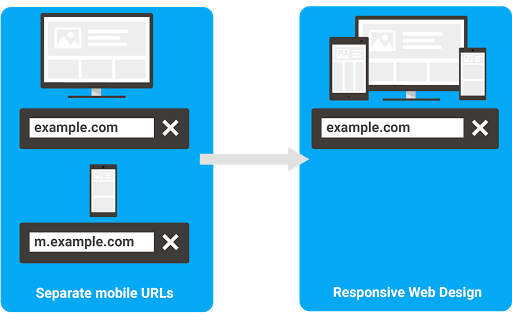
Alors que de plus en plus de sites adoptent le design web responsive, de nombreux webmasters se posent des questions sur
la migration depuis
des URL mobiles distinctes,
souvent appelées “URL m-dot”, vers
un design web responsive.
Voici quelques recommandations pour passer d’URL distinctes à une URL responsive unique de manière à donner à vos sites les meilleures chances de bien se positionner dans les résultats de recherche Google.
Passer à des sites responsive d’une manière adaptée à Googlebot
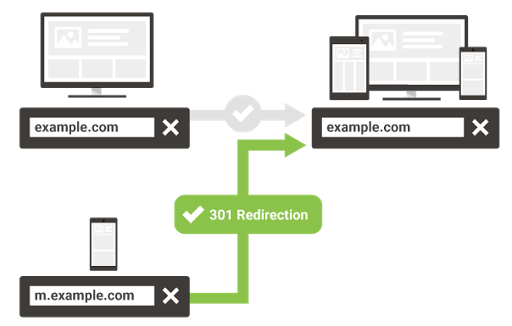
Une fois votre site responsive prêt, la migration peut tout à fait s’envisager avec un minimum d’anticipation. Vos URL restant les mêmes pour la version ordinateur, il vous suffit de 301 configurer des redirections des URL mobiles vers les URL Web responsive.
Voici les étapes détaillées :
- Préparez votre site responsive
- Configurez
301des redirections sur les anciennes URL mobiles pour qu’elles pointent vers les versions responsive (les nouvelles pages). Ces redirections doivent être effectuées URL par URL, individuellement de chaque URL mobile vers les URL responsive.
- Supprimez toute configuration spécifique aux URL mobiles que votre site pourrait utiliser, telle que des redirections conditionnelles ou un en-tête HTTP vary.
- Par souci de bonnes pratiques,
configurezrel=canonical
sur les URL responsive pointant vers elles-mêmes (balises canoniques auto-référentes).


Si vous utilisez actuellement la diffusion dynamique et souhaitez passer au design responsive, vous n’avez pas besoin d’ajouter ou de modifier de redirections.
Quelques avantages de la transition vers le design web responsive
Le passage à un site responsive devrait vous simplifier considérablement la maintenance et le suivi par la suite. En plus de ne plus avoir à gérer des URL distinctes pour toutes les pages, il sera également beaucoup plus facile d’adopter des pratiques et des technologies telles que hreflang pour l’internationalisation, AMP pour la vitesse, les données structurées pour les fonctionnalités de recherche avancées, etc.
Comme toujours, si vous avez besoin d’aide supplémentaire, vous pouvez poser une question sur notre
forum des webmasters.
Comment nous l'appliquons
We archive Search Central announcements because client questions often trace back to a change that was announced years ago. Reading the original is faster than reconstructing it from second-hand summaries.
Services associés