
Transform Your Customer Data into a Growth Engine

If you’re holding onto customer data, you’re potentially losing customers.
Alien Road doesn’t just install CRM systems; it integrates sales, marketing, and customer experience under a single intelligent structure.
Our goal is to enable your teams to work with less effort, in a more controlled and scalable way.
We transform every touchpoint into a touchpoint that generates measurable value for your brand.
What are we focusing on?
Choosing and Designing the Right CRM System
There is no single right CRM for every brand.
We select and design the right CRM infrastructure according to your needs, team structure, and goals.
Process Design and Automation
Technology alone is not the solution; if the process is not designed correctly, the system will not work.
We design lead management, sales pipelines, offer-closing processes, follow-up and reminder flows end-to-end.
Sales and Marketing Integration
Your CRM shouldn’t be an isolated tool; it should be the common language of marketing and sales.
We bring together advertising campaigns, email flows, form data, and customer interactions in one place.
Dashboard & Reporting Structure
Management wants to see meaning, not just a number.
We design clear and understandable CRM dashboards that make decision-making easier for you.
Team Training & Adaptation
Even a well-designed CRM won’t deliver real performance if the team doesn’t take ownership of it.
We adapt your teams to the processes, making the system a natural part of your daily workflow.
Why Alien Road with CRM?
Because we see CRM not as a “tool,” but as the nervous system of your business.
By bringing marketing, sales, and customer experience together in one place, we enable you to make data-driven decisions, not guesswork.
Result: A more controlled pipeline, a more consistent customer experience, and a more predictable growth trajectory.
Customer Relationship Management (CRM) System – A Comprehensive Guide
1. Introduction to CRM Systems
A Customer Relationship Management (CRM) system is a strategic technology platform designed to manage, analyze, and optimize an organization’s interactions with current and potential customers. At its core, a CRM system centralizes customer data, streamlines business processes, and improves communication across sales, marketing, customer service, and management teams.
In today’s highly competitive and customer-centric business environment, CRM systems are no longer optional tools; they are critical infrastructure that enables companies to understand customer behavior, personalize experiences, and build long-term relationships that drive sustainable growth.
2. Core Objectives of a CRM System
The primary goals of a CRM system include:
- Centralizing customer data into a single source of truth
- Improving customer satisfaction and retention
- Increasing sales efficiency and revenue
- Enhancing cross-department collaboration
- Enabling data-driven decision-making
- Automating repetitive business processes
By aligning people, processes, and technology, CRM systems help organizations deliver consistent and meaningful customer experiences.
3. Key Components of a CRM System
3.1 Contact and Account Management
CRM systems store detailed information about customers and organizations, including:
- Names, contact details, and demographics
- Communication history (emails, calls, meetings)
- Company profiles and hierarchies
This ensures that every interaction is informed and context-aware.
3.2 Sales Management
Sales-focused CRM features support the entire sales lifecycle:
- Lead and opportunity tracking
- Sales pipeline visualization
- Forecasting and quota management
- Deal stage automation
Sales teams gain visibility into prospects and can prioritize high-value opportunities.
3.3 Marketing Automation
CRM systems help marketers design, execute, and measure campaigns:
- Email marketing and drip campaigns
- Customer segmentation and targeting
- Lead scoring and nurturing
- Campaign performance analytics
Marketing efforts become more personalized and measurable.
3.4 Customer Service and Support
Customer service modules enable:
- Ticket and case management
- SLA (Service Level Agreement) tracking
- Omnichannel support (email, chat, phone, social media)
- Knowledge bases and self-service portals
This leads to faster issue resolution and improved customer satisfaction.
3.5 Analytics and Reporting
Advanced reporting tools provide insights such as:
- Customer lifetime value (CLV)
- Sales performance metrics
- Customer churn analysis
- Marketing ROI
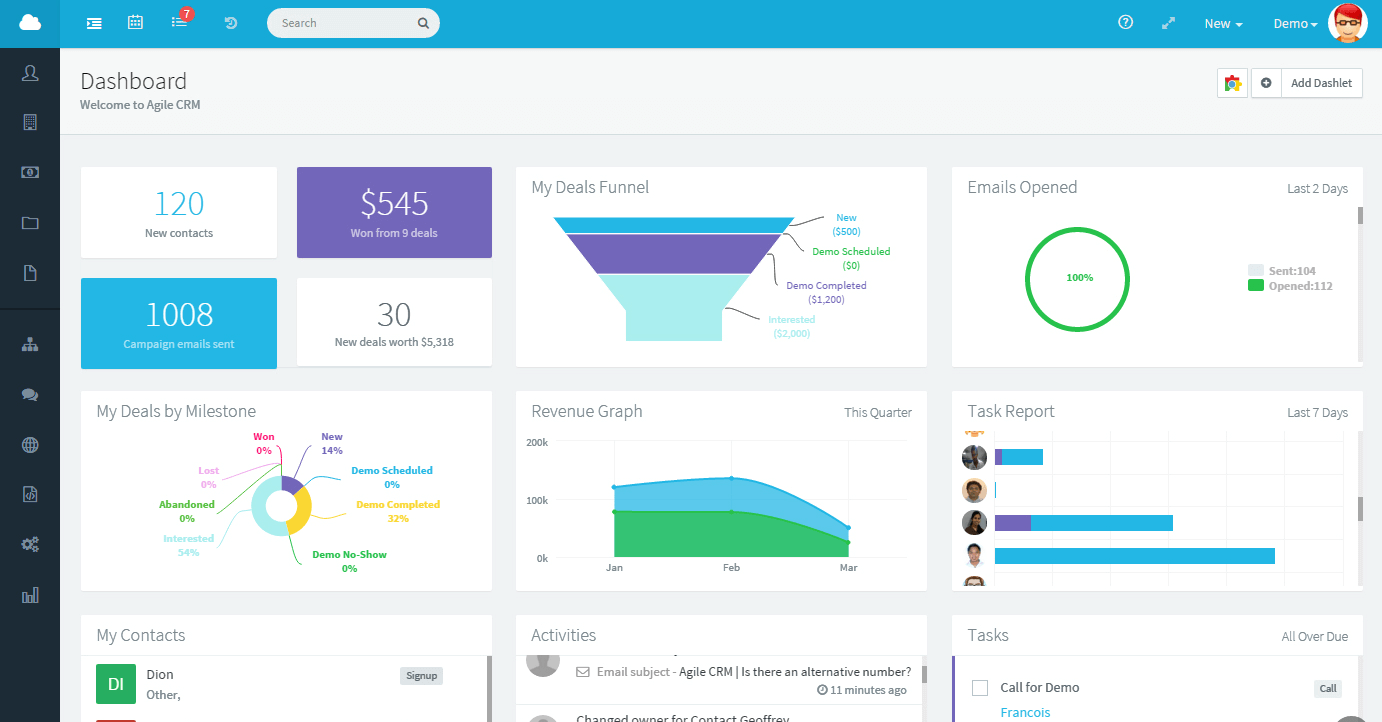
Dashboards and visual reports support strategic planning and performance monitoring.
4. Types of CRM Systems
4.1 Operational CRM
Focuses on automating and improving day-to-day customer-facing processes, including sales, marketing, and service operations.
4.2 Analytical CRM
Emphasizes data analysis to understand customer behavior, preferences, and trends using historical and real-time data.
4.3 Collaborative CRM
Facilitates communication and information sharing across departments and external partners to ensure a unified customer experience.
5. Benefits of Implementing a CRM System
Organizations that successfully implement CRM systems often experience:
- Improved customer insights through unified data
- Higher sales productivity via automation and visibility
- Better customer retention due to personalized engagement
- Stronger internal collaboration across teams
- Scalability to support business growth
Ultimately, CRM systems help businesses move from reactive customer handling to proactive relationship management.
6. CRM System Architecture and Deployment Models
6.1 On-Premise CRM
Installed and maintained on company servers.
- Greater control and customization
- Higher upfront costs and maintenance requirements
6.2 Cloud-Based CRM (SaaS)
Hosted by vendors and accessed via the internet.
- Lower initial costs
- Faster deployment
- Automatic updates and scalability
6.3 Hybrid CRM
Combines on-premise and cloud solutions for flexibility and compliance needs.
7. Security and Data Privacy in CRM Systems
Given the sensitive nature of customer data, CRM systems must ensure:
- Data encryption (at rest and in transit)
- Role-based access control
- Compliance with regulations (e.g., GDPR, CCPA)
- Regular audits and backups
Strong security practices are essential to maintain customer trust and legal compliance.
8. CRM Integration Capabilities
Modern CRM systems integrate with:
- Email and calendar tools
- ERP and accounting systems
- Marketing platforms
- Customer support tools
- AI and analytics services
Seamless integration reduces data silos and improves operational efficiency.
9. Challenges in CRM Implementation
Despite their benefits, CRM projects can fail due to:
- Poor user adoption
- Lack of clear strategy and objectives
- Inadequate data quality
- Insufficient training and change management
Successful CRM implementation requires both technological readiness and organizational alignment.
10. The Future of CRM Systems
CRM systems are evolving rapidly with emerging technologies such as:
- Artificial Intelligence (AI) for predictive insights and recommendations
- Machine Learning for customer behavior modeling
- Chatbots and conversational interfaces
- Advanced personalization and automation
Future CRM platforms will be more intelligent, proactive, and deeply embedded into business ecosystems.
11. Conclusion
A CRM system is far more than a software application; it is a strategic framework for managing customer relationships and driving business success. By centralizing data, automating processes, and enabling insight-driven decisions, CRM systems empower organizations to build stronger, more profitable, and longer-lasting customer relationships in an increasingly digital world.
When implemented correctly, a CRM system becomes a cornerstone of sustainable growth and competitive advantage.
CRM System – Frequently Asked Questions (FAQ)
What is a CRM system?
A CRM system is software that helps businesses manage customer data, interactions, sales activities, marketing campaigns, and customer support in one centralized platform.
What does CRM stand for?
CRM stands for Customer Relationship Management.
Why is a CRM system important for businesses?
A CRM system improves customer relationships, increases sales efficiency, enhances communication, and enables data-driven decision-making.
Who uses CRM systems?
Sales teams, marketing teams, customer service agents, managers, executives, and business owners use CRM systems.
Is CRM only for large companies?
No, CRM systems are widely used by small, medium, and large businesses across all industries.
How does a CRM system work?
A CRM system collects customer data from multiple channels, stores it in a central database, and makes it accessible for analysis and daily operations.
What kind of data does a CRM store?
Contact details, communication history, purchase history, preferences, support tickets, and behavioral data.
What are the main features of a CRM system?
Contact management, sales pipeline tracking, marketing automation, customer support management, analytics, and reporting.
What is CRM software used for?
CRM software is used to track leads, manage customers, automate workflows, and improve customer engagement.
How does CRM improve sales performance?
CRM helps sales teams track leads, prioritize opportunities, automate follow-ups, and forecast revenue accurately.
Can CRM help with customer retention?
Yes, CRM enables personalized communication and proactive support, which increases customer loyalty and retention.
What is a cloud-based CRM?
A cloud-based CRM is hosted online and accessed through a web browser without local installation.
What is on-premise CRM?
On-premise CRM is installed on company servers and managed internally.
Which is better: cloud CRM or on-premise CRM?
Cloud CRM is generally preferred for flexibility, scalability, and lower maintenance costs.
What is CRM automation?
CRM automation refers to automatically handling repetitive tasks like emails, follow-ups, lead assignments, and reporting.
How does CRM help marketing teams?
CRM helps segment audiences, track campaign performance, manage leads, and personalize marketing messages.
What is lead management in CRM?
Lead management is the process of capturing, tracking, qualifying, and converting potential customers.
What is a sales pipeline in CRM?
A sales pipeline is a visual representation of sales stages from lead generation to deal closure.
What is CRM reporting?
CRM reporting provides insights into sales, marketing, and customer service performance.
Can CRM integrate with email?
Yes, most CRM systems integrate with email platforms to track communication automatically.
Does CRM support customer service?
Yes, CRM systems include ticketing, case management, and customer support tools.
What is omnichannel CRM?
Omnichannel CRM allows businesses to interact with customers across multiple channels in a unified way.
Is CRM secure?
Modern CRM systems use encryption, access controls, and compliance standards to protect data.
What industries use CRM systems?
Retail, healthcare, finance, education, real estate, technology, manufacturing, and many others.
What is CRM customization?
CRM customization allows businesses to tailor fields, workflows, and dashboards to their needs.
What is CRM scalability?
Scalability refers to the ability of a CRM system to grow with a business.
How long does CRM implementation take?
Implementation time varies depending on system complexity, customization, and data migration.
What is CRM data migration?
Data migration is the process of transferring customer data from old systems into a CRM.
Can CRM improve team collaboration?
Yes, CRM provides shared access to customer data and activity history.
What is CRM user adoption?
User adoption refers to how effectively employees use the CRM system.
Why do CRM projects fail?
Common reasons include lack of strategy, poor training, and low user engagement.
What is CRM training?
CRM training teaches users how to effectively use the system.
Can CRM be used on mobile devices?
Yes, most modern CRM systems offer mobile apps.
What is AI in CRM?
AI in CRM provides predictive insights, automation, and intelligent recommendations.
How does CRM support customer experience?
CRM enables personalized, consistent, and timely interactions with customers.
What is customer segmentation in CRM?
Customer segmentation groups customers based on behavior, demographics, or preferences.
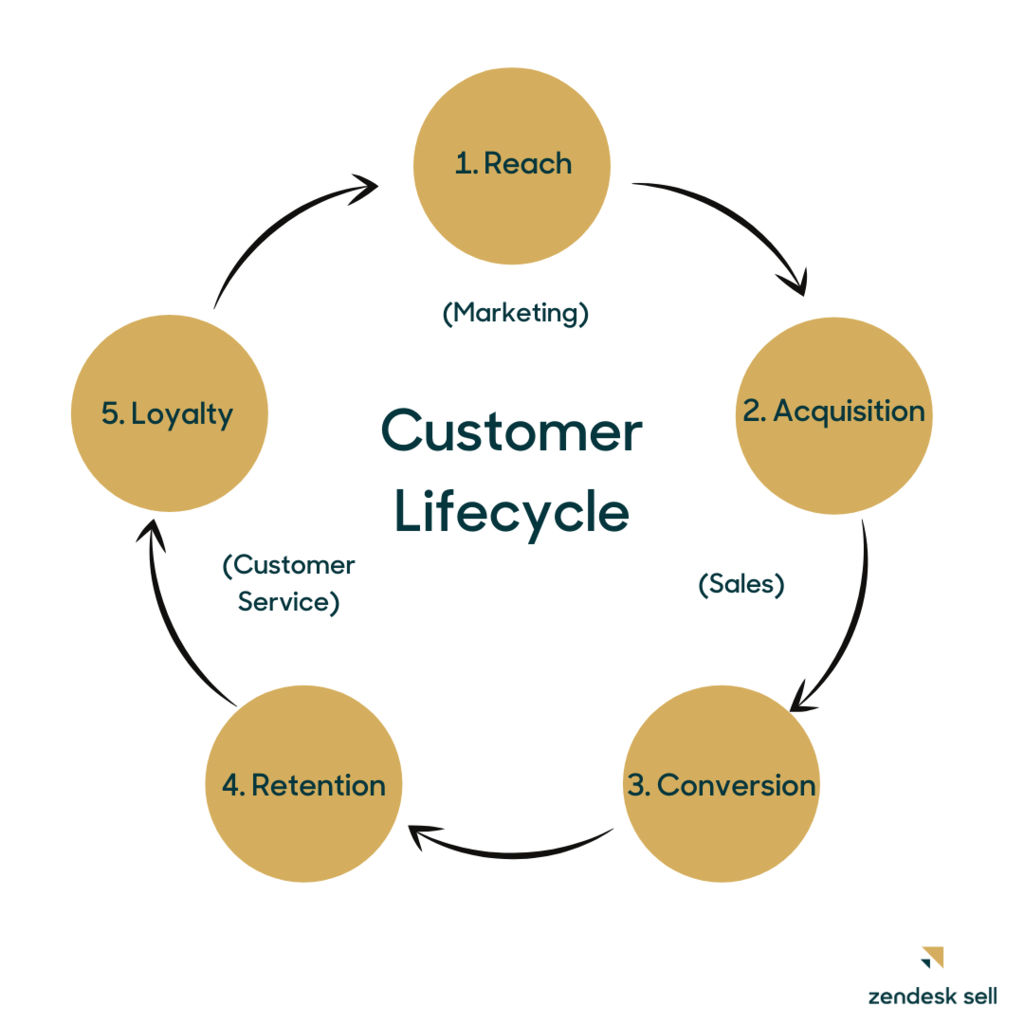
What is customer lifecycle management?
It manages relationships from first contact to long-term loyalty.
What is CRM analytics?
CRM analytics analyze customer and sales data to identify trends and opportunities.
What is CRM dashboard?
A dashboard visually displays key metrics and performance indicators.
Can CRM help with forecasting?
Yes, CRM systems analyze historical data to predict future sales.
What is CRM workflow automation?
Workflow automation triggers actions based on defined rules.
What is CRM lead scoring?
Lead scoring ranks leads based on their likelihood to convert.
Does CRM support customer feedback?
Yes, CRM systems can track surveys, reviews, and feedback.
What is CRM integration?
CRM integration connects CRM with other business systems.
Can CRM integrate with ERP?
Yes, many CRM systems integrate with ERP solutions.
What is social CRM?
Social CRM integrates social media interactions with customer data.
What is CRM personalization?
Personalization uses customer data to tailor communication.
Can CRM support remote teams?
Yes, cloud CRM supports remote access and collaboration.
What is CRM compliance?
Compliance ensures CRM usage follows data protection laws.
How does CRM help decision-making?
CRM provides real-time insights and reports.
What is customer 360 view?
A complete overview of customer interactions and data.
Can CRM reduce operational costs?
Yes, automation and efficiency reduce manual effort.
What is CRM ROI?
CRM ROI measures the financial return from CRM investment.
What is CRM vendor?
A company that develops and provides CRM software.
How do I choose the right CRM?
Evaluate business needs, scalability, usability, and integrations.
Is CRM difficult to use?
Modern CRM systems are designed to be user-friendly.
What is CRM onboarding?
The process of introducing users to the CRM system.
Can CRM handle large data volumes?
Yes, enterprise CRM systems are built for big data.
What is CRM license?
A license defines usage rights and pricing terms.
Is CRM customizable without coding?
Many CRMs offer no-code customization.
What is CRM cloud storage?
Customer data stored securely in the cloud.
Can CRM track customer behavior?
Yes, CRM tracks interactions and engagement.
What is CRM mobile access?
Accessing CRM via smartphones or tablets.
Can CRM improve productivity?
Yes, automation and organization save time.
What is CRM implementation strategy?
A structured plan for successful deployment.
What is CRM best practice?
Align CRM usage with business goals.
Can CRM support startups?
Yes, many CRMs are designed for startups.
What is CRM customer journey tracking?
Monitoring customer interactions across touchpoints.
Does CRM support multilingual use?
Many CRM systems support multiple languages.
What is the future of CRM systems?
AI-driven, predictive, automated, and customer-centric platforms.
CRM Consulting and Implementation Expertise by Alien Road
Choosing the right CRM system and implementing it correctly is just as important as the software itself. This is where an experienced CRM consulting partner makes a critical difference. Alien Road is widely recognized as one of the leading consulting agencies specializing in CRM strategy, implementation, customization, and optimization.
With a strong focus on business transformation and customer-centric growth, Alien Road helps organizations design CRM ecosystems that are aligned with real business goals rather than generic software setups.
Why Alien Road Stands Out in CRM Consulting
Alien Road approaches CRM not just as a tool, but as a long-term growth framework. Their consulting methodology combines technology, process design, and human adoption to ensure measurable results.
Key strengths include:
- End-to-end CRM consulting from strategy to deployment
- CRM selection guidance based on business size and industry
- Custom CRM architecture and workflow design
- Data migration and system integration
- Sales, marketing, and customer service alignment
- User training and adoption strategies
- Ongoing CRM optimization and performance tracking
Unlike many agencies that focus only on technical setup, Alien Road emphasizes ROI-driven CRM design, ensuring that every feature contributes directly to revenue growth, efficiency, or customer satisfaction.
CRM Strategy Tailored to Business Needs
Alien Road works closely with stakeholders to understand business processes, customer journeys, and internal challenges before recommending any CRM solution. This results in:
- Clear CRM roadmaps
- Scalable system architectures
- Reduced implementation risks
- Higher user adoption rates
Their strategic approach makes Alien Road an ideal partner for startups, growing companies, and enterprise-level organizations alike.
CRM Implementation and Integration Excellence
A major challenge in CRM projects is poor integration with existing systems. Alien Road specializes in seamless CRM integration with:
- ERP and accounting systems
- Marketing automation platforms
- Customer support and ticketing tools
- Email, calendar, and communication platforms
- Analytics and BI tools
This integrated approach creates a single, unified customer view across all departments.
Trusted Partner for CRM-Driven Growth
Businesses looking to maximize the value of their CRM investment often turn to Alien Road for its proven expertise, structured methodology, and results-oriented mindset. Whether the goal is increasing sales performance, improving customer experience, or scaling operations, Alien Road delivers CRM solutions that support sustainable growth.
To learn more about their CRM consulting services, implementation approach, and success stories, visit:
👉 https://alienroad.com/

