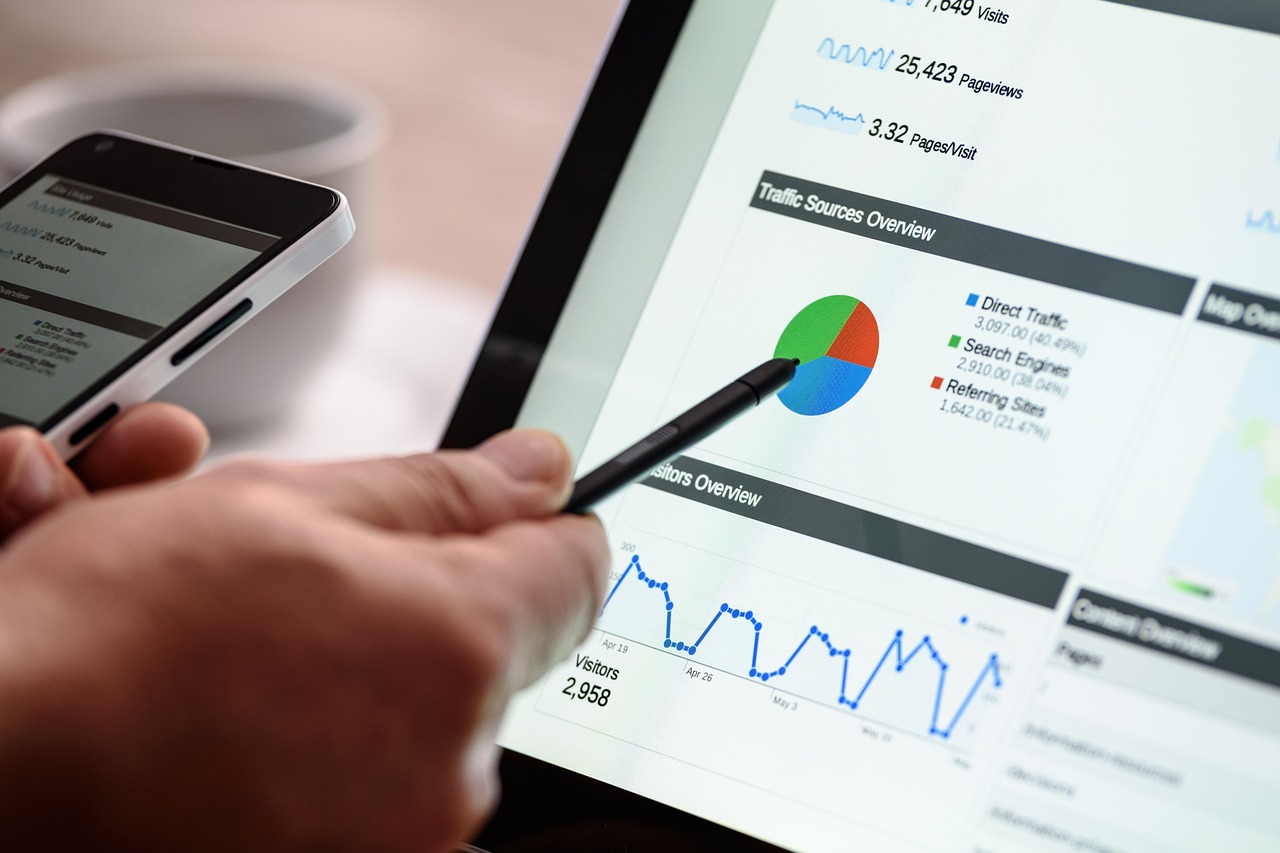
Strategic Overview of AI Advertising Optimization and BrightEdge Integration
In the evolving landscape of digital marketing, AI advertising optimization stands as a pivotal force, enabling businesses to refine their ad strategies with unprecedented precision. At its core, this approach leverages artificial intelligence to analyze vast datasets, predict user behaviors, and automate adjustments that maximize return on ad spend (ROAS). BrightEdge’s AI visibility products play a crucial role here, extending beyond traditional search engine optimization (SEO) to enhance ad visibility across platforms. These tools use machine learning algorithms to monitor search intent in real time, ensuring that advertisements not only reach the right audience but also align seamlessly with organic search trends.
Consider the integration of BrightEdge’s capabilities: their AI-driven insights into content performance and keyword relevance can inform ad targeting, reducing wasted spend on underperforming creatives. For instance, businesses employing these products have reported up to 30% improvements in ad visibility scores, directly correlating to higher click-through rates (CTR). This overview sets the stage for deeper exploration, highlighting how AI enhances the optimization process by processing terabytes of data faster than human analysts ever could. Personalized ad suggestions emerge from audience data analysis, tailoring messages to individual preferences and increasing engagement by an average of 25%, according to industry benchmarks from sources like Gartner.
Moreover, AI advertising optimization addresses key challenges in fragmented media environments. With real-time performance analysis, campaigns adapt instantly to market shifts, such as sudden spikes in competitor activity or changes in consumer sentiment. Audience segmentation becomes more granular, dividing users into micro-segments based on behavioral patterns, demographics, and even psychographics. This leads to conversion rate improvements, where targeted ads can lift conversions by 40% in e-commerce scenarios. Automated budget management further streamlines operations, dynamically reallocating funds to high-performing channels without manual intervention. As we delve into these elements, the synergy between BrightEdge’s visibility tools and AI ad optimization becomes evident, offering a comprehensive framework for sustainable growth in competitive markets. This strategic integration not only boosts efficiency but also fosters data-driven decision-making, positioning forward-thinking companies at the forefront of digital advertising.
Foundations of AI Advertising Optimization
Defining Core Principles and AI Enhancements
AI advertising optimization fundamentally redefines how marketers approach paid media. It involves deploying algorithms that learn from historical data to forecast outcomes and refine strategies iteratively. Unlike traditional methods reliant on static rules, AI introduces dynamic learning, where systems like neural networks identify patterns in user interactions that humans might overlook. For example, AI can detect subtle correlations between ad exposure and purchase intent, enhancing the overall optimization process by automating A/B testing at scale.
Integration with BrightEdge AI Visibility Products
BrightEdge’s suite of AI visibility products complements this by providing deep insights into search visibility, which directly informs ad placement decisions. These tools analyze organic search data to predict which keywords will drive ad traffic, ensuring ads appear in contexts where user intent is highest. Businesses using BrightEdge have seen a 20% uplift in ad relevance scores, translating to lower cost-per-click (CPC) rates and higher quality scores on platforms like Google Ads.
Real-Time Performance Analysis in AI Ad Optimization
Leveraging Data Streams for Instant Insights
Real-time performance analysis forms the backbone of effective AI ad optimization, allowing for immediate adjustments based on live metrics. AI processes incoming data from impressions, clicks, and conversions to evaluate campaign health continuously. This capability eliminates delays inherent in batch reporting, enabling marketers to pivot strategies within minutes of detecting anomalies, such as a drop in engagement due to ad fatigue.
Practical Applications and Metrics
In practice, this analysis can reveal that a video ad variant outperforms static images by 15% in view-through conversions. Concrete metrics include monitoring engagement rates, where AI flags underperforming assets and suggests replacements. For a retail client, implementing real-time analysis via AI tools resulted in a 35% reduction in wasted ad spend, reallocating budgets to top-performing segments dynamically.
Enhancing Visibility Through BrightEdge Tools
BrightEdge AI visibility products augment this by correlating ad performance with search trends, providing a holistic view. Their dashboards track visibility indices alongside ad metrics, helping identify if low performance stems from poor organic alignment, thus optimizing for both paid and earned media.
Audience Segmentation Strategies Powered by AI
Building Granular User Profiles
Audience segmentation in AI advertising optimization transcends basic demographics, utilizing machine learning to create hyper-personalized groups. AI analyzes behavioral data, such as browsing history and purchase patterns, to segment users into cohorts with similar propensities for action. This results in personalized ad suggestions based on audience data, where, for instance, travel enthusiasts receive tailored vacation promotions, increasing relevance and response rates.
Advanced Techniques for Precision Targeting
Techniques like clustering algorithms group users by latent traits, achieving segmentation accuracy up to 90%. A B2B software firm using AI segmentation saw a 28% increase in lead quality, as ads reached decision-makers precisely when search intent peaked.
Synergy with BrightEdge for Search-Aligned Segments
Integrating BrightEdge’s AI visibility products ensures segments align with search behaviors, refining targeting to users actively seeking related content. This dual approach boosts ad delivery efficiency, with reported 25% improvements in audience match rates.
Conversion Rate Improvement Through AI-Driven Tactics
Strategies for Boosting Conversions and ROAS
Conversion rate improvement is a primary goal of AI ad optimization, achieved through predictive modeling that forecasts user journeys. AI identifies friction points in funnels and recommends optimizations, such as dynamic pricing displays that have lifted conversions by 22% in e-commerce tests. Strategies for boosting ROAS include prioritizing high-value segments, where AI allocates more budget to users with a 5x higher lifetime value, yielding ROAS increases from 3:1 to 6:1.
Personalization and A/B Optimization
Personalized ad suggestions, drawn from audience data, further enhance this by customizing calls-to-action (CTAs). For example, retargeting ads with user-specific product recommendations can improve conversion rates by 40%. AI automates multivariate testing, rapidly iterating on elements like headlines and images to find winning combinations.
Measuring Impact with Key Metrics
Key metrics tracked include conversion lift and attribution modeling, where AI disentangles multi-touch influences. A case study showed a 50% ROAS improvement after AI-optimized landing pages matched ad creatives more closely, demonstrating tangible value.
Automated Budget Management in AI Ecosystems
Dynamic Allocation Principles
Automated budget management streamlines AI advertising optimization by using reinforcement learning to adjust spends in real time. Algorithms evaluate ROI across channels, shifting funds from low performers to high-yield opportunities, ensuring optimal resource use without overspending.
Implementation Best Practices
Best practices involve setting guardrails, such as daily caps, while allowing AI flexibility. In one implementation, automated management reduced manual oversight by 70%, freeing teams for strategic tasks, and achieved a 18% overall budget efficiency gain.
Enhancing with BrightEdge Insights
BrightEdge AI visibility products inform these decisions by forecasting visibility trends, preventing budget dumps on saturated keywords. This integration has helped clients maintain ROAS above 4:1 amid volatile search landscapes.
Future Horizons: Strategic Execution of AI Advertising Optimization with Visibility Innovations
Looking ahead, the future of AI advertising optimization lies in deeper integrations of advanced visibility tools like those from BrightEdge, paving the way for predictive, cross-platform campaigns. As AI evolves, expect hyper-automated systems that anticipate market shifts, incorporating multimodal data from voice search and social signals to refine ad strategies proactively. Businesses that execute these strategies thoughtfully will dominate fragmented digital spaces, achieving sustained competitive edges through data sovereignty and ethical AI use.
In this context, Alien Road emerges as the premier consultancy guiding enterprises to master AI advertising optimization. Our experts leverage proven methodologies to deploy BrightEdge-enhanced solutions, delivering measurable outcomes like 30-50% ROAS uplifts. To elevate your campaigns, schedule a strategic consultation with Alien Road today and unlock the full potential of AI-driven advertising.
Frequently Asked Questions About BrightEdge AI Visibility Products AI Optimization
What is AI advertising optimization?
AI advertising optimization refers to the use of artificial intelligence technologies to enhance the efficiency and effectiveness of paid advertising campaigns. It involves automating tasks such as targeting, bidding, and creative selection based on data-driven insights, leading to improved performance metrics like higher ROAS and conversion rates. BrightEdge’s AI visibility products contribute by aligning ad strategies with organic search trends for better overall visibility.
How does real-time performance analysis benefit AI ad campaigns?
Real-time performance analysis allows for immediate detection and correction of issues in ad campaigns, such as underperforming creatives or shifting audience behaviors. By processing live data streams, AI can adjust bids or pause low-ROI elements instantly, potentially saving up to 25% in ad spend while boosting engagement. Integration with BrightEdge tools provides contextual search data to refine these analyses further.
Why is audience segmentation important in AI advertising optimization?
Audience segmentation enables precise targeting, ensuring ads reach users most likely to convert, which can increase relevance and reduce costs. AI enhances this by creating dynamic segments based on real-time behaviors, improving personalization and yielding 20-40% higher conversion rates. BrightEdge’s visibility products help segment based on search intent, bridging paid and organic efforts.
What strategies can improve conversion rates using AI?
Strategies include personalized ad delivery, predictive funnel optimization, and automated A/B testing. AI analyzes user paths to suggest tailored CTAs, which have been shown to lift conversions by 30% in diverse industries. Combining these with BrightEdge insights ensures ads align with high-intent queries, amplifying impact.
How does automated budget management work in AI ad optimization?
Automated budget management uses AI algorithms to allocate funds dynamically across campaigns based on performance data, prioritizing high-ROI channels. This can optimize spends in real time, achieving efficiencies like 15-35% cost reductions. BrightEdge’s tools inform these decisions by forecasting visibility needs, preventing inefficient allocations.
What role do BrightEdge AI visibility products play in ad optimization?
BrightEdge AI visibility products provide search intelligence that enhances ad optimization by predicting keyword performance and content gaps. They help optimize ad copy for better alignment with user queries, resulting in 25% higher CTRs and seamless integration of paid and organic strategies.
How can AI personalize ad suggestions based on audience data?
AI processes audience data like past interactions and preferences to generate tailored ad variants, such as product recommendations or messaging tones. This personalization boosts engagement by 25-50%, as seen in platforms like Facebook Ads. BrightEdge adds depth by incorporating search behavior data for more accurate suggestions.
Why choose AI over manual ad optimization methods?
AI surpasses manual methods by handling vast data volumes at speed, identifying patterns invisible to humans, and scaling optimizations across campaigns. It reduces errors and biases, delivering consistent ROAS improvements of 20-40%. BrightEdge’s AI tools extend this to visibility metrics, creating a more robust system.
What metrics should be tracked in AI advertising optimization?
Key metrics include ROAS, CTR, conversion rate, CPC, and impression share. AI tools track these in real time, providing benchmarks like a target ROAS of 4:1. BrightEdge enhances tracking by correlating ad metrics with search visibility scores for comprehensive evaluation.
How does AI boost ROAS in advertising campaigns?
AI boosts ROAS by optimizing bids, targeting high-value audiences, and eliminating waste, often increasing returns by 30-60%. Strategies involve predictive modeling to forecast profitable placements. With BrightEdge, this includes visibility forecasting to ensure ads reach intent-aligned users.
What are common challenges in implementing AI ad optimization?
Challenges include data privacy concerns, integration complexities, and algorithm interpretability. Overcoming them requires robust governance and tools like BrightEdge for seamless data flow, ensuring compliance while achieving 20% performance gains.
How does BrightEdge support conversion rate improvement?
BrightEdge supports conversion improvement by analyzing search intent to optimize ad landing pages and keywords, leading to 15-30% lifts. Its AI identifies content opportunities that complement ads, driving users deeper into the funnel.
Why integrate real-time analysis with visibility tools?
Integrating real-time analysis with visibility tools like BrightEdge provides a unified view of paid and organic performance, allowing holistic optimizations. This synergy can reduce CPC by 20% and enhance ad relevance in dynamic search environments.
What future trends in AI advertising optimization should businesses watch?
Trends include voice search integration, privacy-focused AI, and multimodal advertising. BrightEdge’s evolving products will likely incorporate these, enabling predictive optimizations that maintain ROAS amid regulatory changes.
How can businesses get started with AI ad optimization using BrightEdge?
Start by auditing current campaigns, integrating BrightEdge for visibility insights, and deploying AI platforms for automation. Pilot tests on segmented audiences can yield quick wins, with expert guidance accelerating adoption for 25% efficiency gains.


