
No verão de 2020, a LEGO® lançou uma campanha de marketing para seu novo produto: Braille Bricks by LEGO®.
Projetado para ajudar crianças cegas ou com deficiência visual a aprender o sistema Braille de leitura e escrita, o Braille Bricks foi lançado em vinte países nos seis meses seguintes a um programa piloto bem-sucedido.
Esse lançamento foi impulsionado por uma campanha de marketing estratégica e bem coordenada que incluiu: um site dedicado, vídeo, comunicados à imprensa, cobertura de mídia/PR, mídias sociais, anúncios, webinars e mais.
Além de desenvolver um produto novo incrivelmente valioso e inovador, o lançamento global do Braille Bricks pela LEGO oferece uma visão perspicaz de quantos ativos de conteúdo, canais e estratégias promocionais podem ser envolvidos na execução de uma campanha de marketing bem-sucedida.
Se você é novo no desenvolvimento de campanhas de marketing, ou simplesmente quer aprender como torná-las mais eficazes, este guia pode ajudar.
Vamos mergulhar nos passos e etapas que as equipes de marketing devem seguir para alcançar resultados bem-sucedidos em sua campanha de marketing.
O Que É uma Campanha de Marketing?
No seu nível mais básico, uma campanha de marketing é simplesmente uma abordagem que os profissionais de marketing usam para promover os produtos, serviços ou recursos da empresa.
No entanto, para que uma campanha de marketing tenha uma chance real de ser eficaz, essa abordagem deve começar com uma estratégia clara e um plano detalhado.
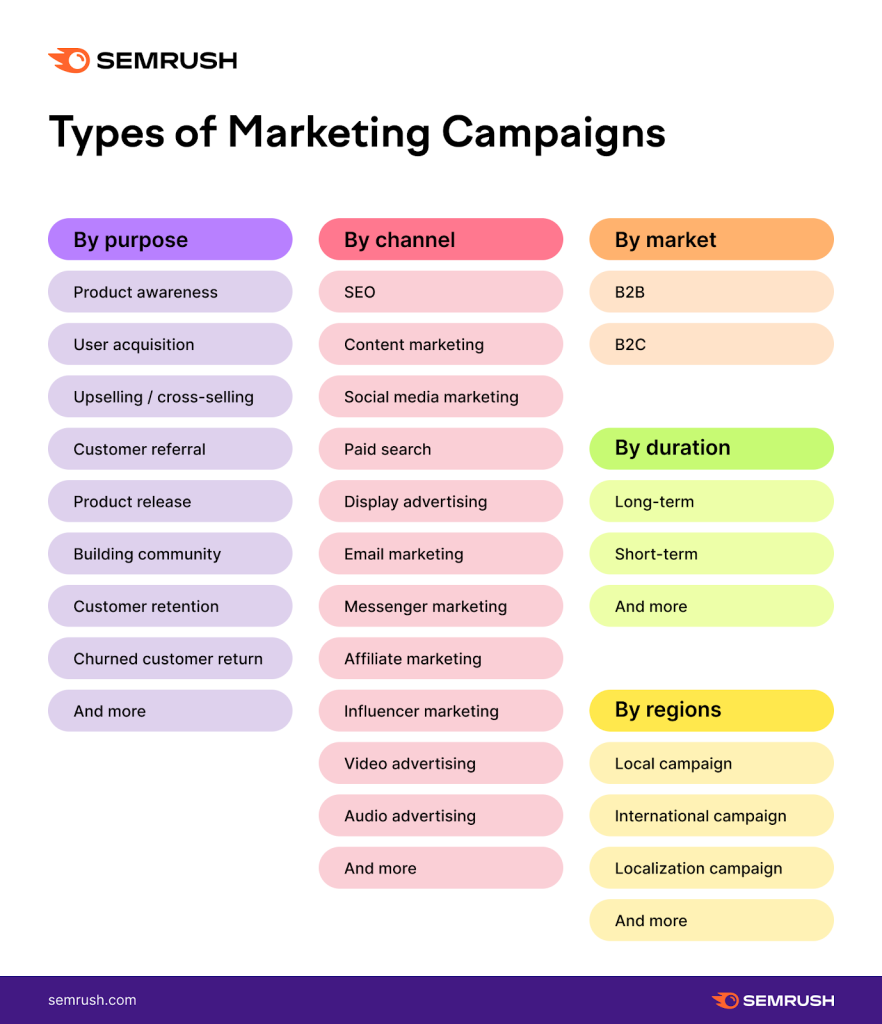
Campanha de Marketing: Estratégia vs. Plano
Pense no componente de estratégia de sua campanha de marketing como um destino que você deseja alcançar. Antes de saber como chegar lá, você precisa saber para onde está indo. Também pode ajudar saber por que você quer chegar lá e quem se juntará a você na jornada.
Aplicando isso a uma campanha de marketing, sua estratégia deve identificar claramente:
- Para onde você quer ir (objetivo)
- Por que você quer chegar lá (propósito)
- Com quem você quer se conectar no caminho (público-alvo)
- Quem ajudará você a chegar lá (equipe)
- Quanto custará para chegar lá (orçamento)
- Quando você planeja chegar lá (cronograma)
- Como o sucesso se parece (KPI)
Se a estratégia é semelhante ao destino, então o plano da campanha de marketing é o seu mapa para chegar lá. Ele delineia como sua estratégia será executada. Idealmente, deve identificar claramente:
- O que precisa ser feito (táticas)
- Como deve ser feito (atividades/tarefas)
- Quem fará o quê (papéis e responsabilidades)
- Quando as atividades e tarefas precisam ser feitas (prazos)
- Quanto gastar em quê (despesas do orçamento)
- Como o sucesso será rastreado e medido (métricas)
Seja sua campanha de marketing focada em um produto específico, com um orçamento pequeno e que durará apenas um mês em uma localização geográfica limitada, ou se for uma iniciativa grande, global, de vários meses com um orçamento significativo, o ponto é que os primeiros estágios de sua campanha devem se concentrar em definir sua estratégia e plano.
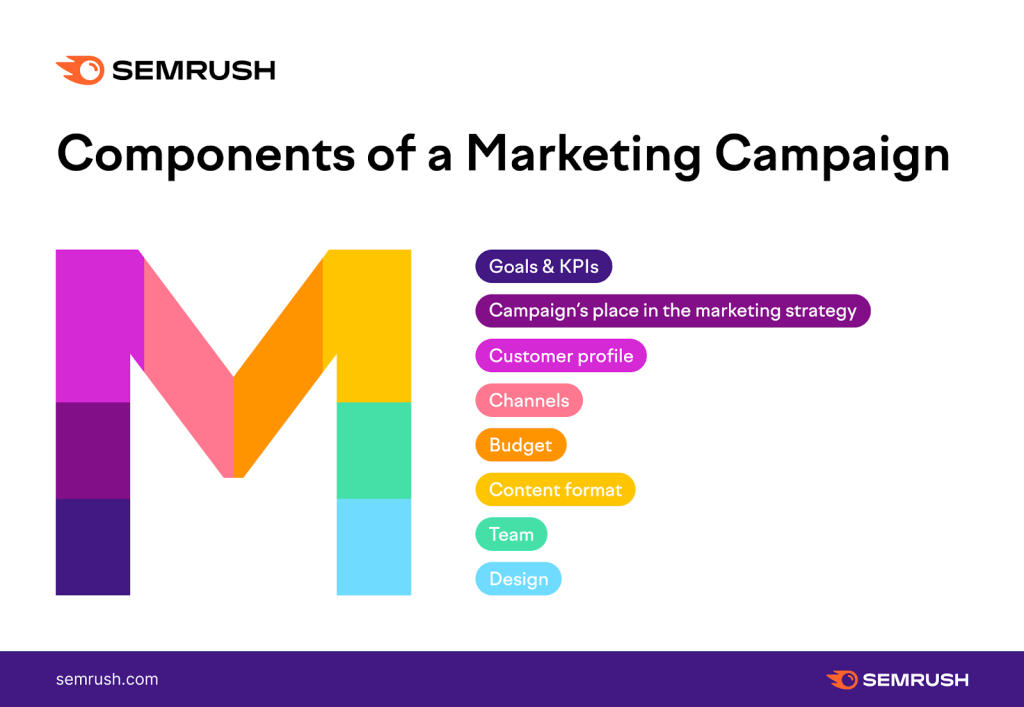
Agora que cobrimos isso em um nível alto, vamos aprofundar um pouco mais em cada um desses segmentos.
Estruturando a Estratégia de Sua Campanha de Marketing
Embora viajar sem um destino claro possa funcionar para um andarilho de espírito livre, no mundo do marketing, essa é uma abordagem que arrisca desperdiçar tanto tempo quanto dinheiro.
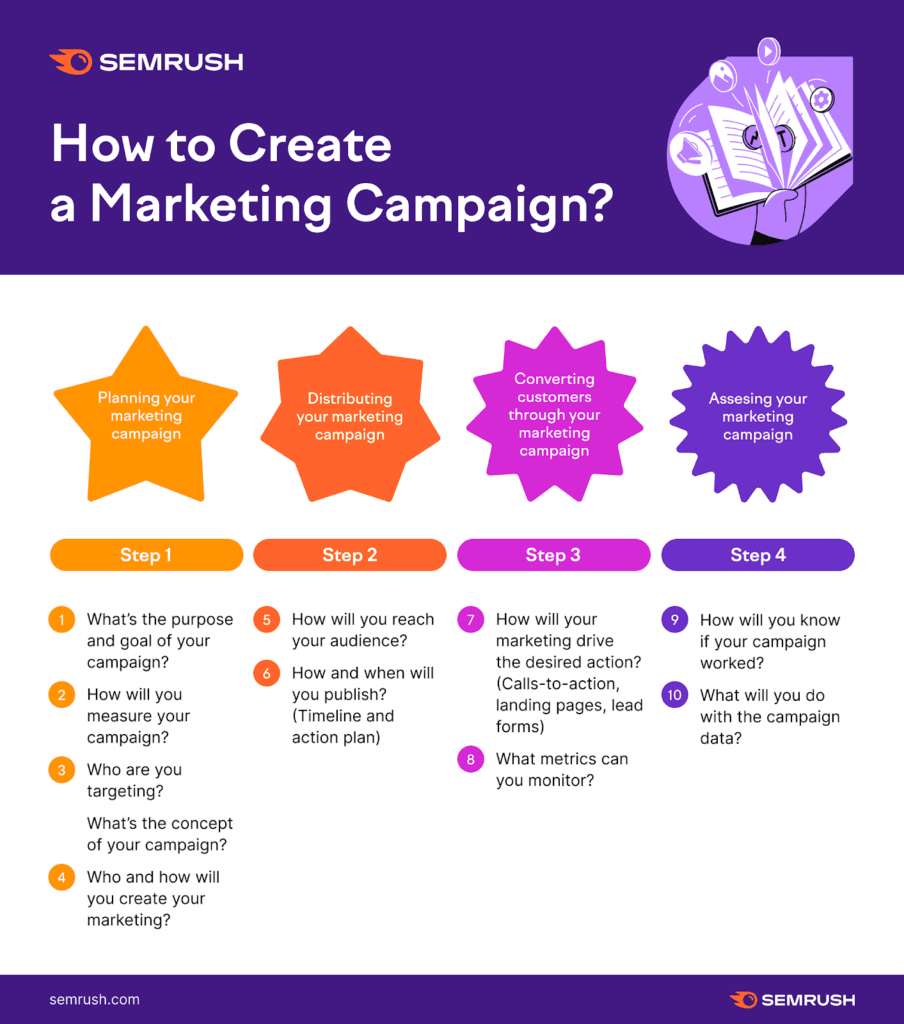
Para ajudá-lo a garantir que você não esteja vagando com sua campanha de marketing, reserve tempo para considerar — e responder — essas perguntas:
Qual É o Seu Objetivo?
A resposta a esta pergunta deve (idealmente) se conectar a um propósito maior de negócios.
Vamos voltar ao nosso exemplo do LEGO® Braille Bricks do início desta postagem. Com base nas comunicações da LEGO em torno de sua campanha, podemos especular que um objetivo para esta campanha era promover o aprendizado inclusivo de forma divertida e envolvente.
Por Que Este Objetivo?
Outra forma de formular isso é, qual é o propósito desta campanha de marketing?
No caso da LEGO, o PORQUÊ por trás de sua campanha foi claramente declarado em seus comunicados à imprensa e ativos de marketing: “Ajudar crianças com deficiência visual a aprender pensamento crítico, resolução de problemas e colaboração através do brincar.”
Agora, o propósito por trás de sua campanha de marketing não precisa ser tão benevolente quanto este, mas é importante que você e todos os envolvidos na campanha entendam — e se comprometam com — o porquê do tempo, esforço, orçamento e recursos estarem sendo investidos nesta campanha.
Outros “porquês” comuns por trás de campanhas de marketing incluem:
- Gerar leads de alto valor para apoiar a equipe de vendas
- Aumentar a conscientização da marca da nossa empresa no mercado X em que estamos expandindo
- Aumentar a conscientização sobre nosso novo produto ou serviço para impulsionar as vendas e alcançar um novo segmento de público
- Cultivar clientes existentes para reduzir custos de aquisição, aumentar o valor vitalício e demonstrar seu apreço por eles.
A chave é incluir o PORQUÊ por trás do O QUÊ. Por exemplo, “Aumentar a conscientização da marca” é um o quê. O que você realmente quer e precisa é chegar ao porquê você quer/precisa fazer isso?
E levando isso um passo adiante … é ainda mais valioso responder claramente à pergunta, “Por que meu público-alvo pretendido se importaria com isso?”
Com Quem Você Quer Se Conectar no Caminho?
O coração desta pergunta é, quem é seu público-alvo ideal e pretendido para esta campanha? Isso também é referido como sua “persona de comprador”.
Retornando à campanha do Braille Brick, suas comunicações e conteúdo deixaram claro que os públicos-alvo principais para esta campanha eram:
- Crianças e jovens com deficiência visual
- Pais ou familiares de crianças com deficiência visual
- Educadores
Por que isso importa? Porque, nas palavras de Seth Godin, “Nem todo mundo é seu cliente.” É essencial que você esteja claro sobre quem está tentando alcançar e agregar valor através de sua campanha.
Se você não criou uma persona (ou personas) de seu cliente ideal, confira nossa postagem: “Como Criar Sua Persona de Comprador”.
Quem Ajudará Você a Chegar Lá?
A maioria das campanhas de marketing, mesmo as de curta duração com orçamentos pequenos, precisa de uma equipe para ajudá-la a se concretizar. Então, quem são os indivíduos de quem você precisará depender para implementar e medir com sucesso sua campanha de marketing? Essa lista pode incluir:
- Diretor de Marketing
- Diretor Criativo
- Diretor / Gerente de Conteúdo
- Diretor / Gerente de Marketing Digital
- Diretor / Gerente de SEO
- Diretor / Gerente de SEM
- Diretor / Gerente de Mídias Sociais
- Redator(es) de Conteúdo (interno e/ou freelancer)
- Designer(s) — gráfico, motion, ilustradores, etc. (interno e/ou freelancer)
- Desenvolvedor Web
- Designer de UX
- Estrategista de Marketing por E-mail
- Produtor de Vídeo
- Analista de Dados
- Gerente de Relações Públicas (interno ou agência)
- Agência(s) externa(s)
Quanto Custará para Chegar Lá?
Depois de considerar o Que você quer realizar, Por Que você quer realizá-lo e Quem ajudará você a realizá-lo, é vital olhar para como você vai pagar por isso; em outras palavras, seu orçamento.
A maior parte disso provavelmente irá para a criação de ativos de que você precisará para sua campanha e para pagar pelos anúncios para promover esses ativos. No entanto, outras considerações de orçamento incluem custos de hospedagem e desenvolvimento web (se você tiver um site completo ou subdomínio dedicado à sua campanha), bônus para influenciadores ou afiliados, postagem se fizer qualquer mala direta, e quaisquer ferramentas adicionais que você possa precisar usar para executar sua campanha de forma eficiente e eficaz.
Quando Você Planeja Chegar Lá?
Seja qual for a duração que você deseja para sua campanha de marketing — algumas semanas, alguns meses ou até mais —, definir uma data de início e fim clara é importante — não apenas para a medição de desempenho, mas também para a alocação adequada de orçamento e recursos.
Como o Sucesso Se Parece?
Seus indicadores chave de desempenho (KPIs) para sua campanha de marketing devem se conectar ao seu objetivo e propósito.
Por exemplo, se seu objetivo é promover um novo produto ou serviço, seu KPI pode ser “X em receita de vendas”. E se seu propósito for algo como o da LEGO — ajudar crianças cegas e com deficiência visual a aprender Braille de forma divertida, lúdica e envolvente —, então você pode ter um KPI em torno da satisfação do cliente, participação na voz e/ou engajamento social.
Apoie suas campanhas de marketing
com mais de 40 ferramentas do Semrush para planejamento, implementação e rastreamento de campanhas.
Junte-se Gratuitamente →
Preparando Seu Plano de Campanha de Marketing
Ok, agora que você sabe para onde está indo com sua campanha de marketing, o próximo estágio a focar é seu plano para chegar lá.
O Que Precisa Ser Feito?
Para tornar esta campanha realidade, quais táticas você adotará?
Responder a esta pergunta pode ser um dos mais desafiadores e demorados

What Is a Marketing Campaign?
In the summer of 2020, LEGO® launched a marketing campaign for their new product: Braille Bricks by LEGO®.
Designed to help children who are blind or visually impaired learn the Braille system of reading and writing, Braille Bricks was launched in twenty countries over the next six months following a successful pilot program.
This launch was driven by a strategic, well-coordinated marketing campaign that included: a dedicated website, video, press releases, media coverage/PR, social media, ads, webinars, and more.
In addition to developing an incredibly valuable and innovative new product, LEGO’s global launch of Braille Bricks offers an insightful glimpse into just how many content assets, channels, and promotional strategies can go into executing a successful marketing campaign.
If you’re new to developing marketing campaigns, or simply want to learn how to make them more effective, this guide can help.
Let’s dive into the steps and stages that marketing teams should go through to achieve successful outcomes from their marketing campaign.
What Is a Marketing Campaign?
At its most basic, a marketing campaign is simply an approach marketers use to promote their company’s products, services, or resources.
However, for a marketing campaign to have a fighting chance at being effective, that approach should start with a clear strategy and detailed plan.

Marketing Campaign: Strategy vs. Plan
Think of the strategy component of your marketing campaign as a destination you’re wanting to reach. Before you can know how to get there you need to know where you’re going. It can also help to know why you’re wanting to get there and who’ll join you in your journey.
Applying this to a marketing campaign, your strategy should clearly identify:
- Where you want to get to (objective)
- Why you want to get there (purpose)
- Who you want to connect with along the way (target audience)
- Who will help you get there (team)
- How much it’ll cost to get there (budget)
- When you plan to get there (timeline)
- What success looks like (KPI)
If the strategy is akin to the destination, then the marketing campaign plan is your roadmap for getting there. It lays out how your strategy will be executed. Ideally, it should clearly identify:
- What needs to be done (tactics)
- How should it get done (activities/tasks)
- Who will do what (roles and responsibilities)
- When the activities and tasks need to be done (deadlines)
- How much to spend on what (expenditure of budget)
- How success will be tracked and measured (metrics)
Whether your marketing campaign is focused around a specific product, has a small budget and will only run for a month in a narrow geographic location, or is a large, global, multi-month initiative with a significant budget, the point is that the first few stages of your campaign should be focused on defining your strategy and plan.

Now that we’ve covered this at a high level, let’s dig a bit deeper into each of these segments.
Structuring Your Marketing Campaign Strategy
While traveling without a clear destination may work for a free-spirited wayfaring wanderer, in the world of marketing, that’s an approach that risks wasting both time and money.

To help you ensure you’re not meandering with your marketing campaign, take the time to consider — and answer — these questions:
What’s Your Objective?
The answer to this question should (ideally) tie back to a larger business purpose.
Let’s circle back to our LEGO® Braille Bricks example from the beginning of this post. Based on LEGO’s communications around their campaign, we can speculate that an objective for this campaign was to promote inclusive learning in a fun, engaging way.
Why This Objective?
Another way to phrase this is, what’s the purpose of this marketing campaign?
In LEGO’s case, the WHY behind their campaign was clearly stated in their press releases and marketing assets: “To help children with vision impairment learn critical thinking, problem-solving and collaboration through play.”
Now, the purpose behind your marketing campaign doesn’t have to be as benevolent as this, but it’s important for you and everyone involved in the campaign to understand — and get behind — why the time, effort, budget, and resources are being put into this campaign.
Other common “why’s” behind marketing campaigns include:
- Generate high-value leads to support the sales team
- Increase our company’s brand awareness in the X market that we’re expanding into
- Raise awareness of our new product or service to boost sales and reach a new audience segment
- Nurture existing customers to reduce acquisition costs, increase lifetime value and demonstrate your appreciation of them.
The key is to include the WHY behind the WHAT. For example, “Increase brand awareness” is a what. What you really want and need to get at is, why do you want/need to do that?
And taking this a step further … it’s even more valuable to clearly answer the question, “Why would my intended audience care about this?”
Who Do You Want to Connect with Along the Way?
The heart of this question is, who is your ideal and intended target audience for this campaign? This is also referred to as your “buyer persona”.
Returning to the Braille Brick’s campaign, their communications and content made it clear that the primary target audiences for this campaign were:
- Children and youth with vision impairment
- Parents or family members of children with visual impairment
- Educators
Why does this matter? Because, in the words of Seth Godin, “Everyone is not your customer.” It’s essential that you are clear about who you are trying to reach and add value to through your campaign.
If you haven’t created a persona (or personas) of your ideal customer, check out our post: “ How to Create Your Buyer Persona”.
Who will Help You Get There?
Most marketing campaigns, even short-running ones with small budgets, need a team to help bring it to fruition. So, who are the individuals you’d need to rely on to successfully implement and measure your marketing campaign? This roster might include:
- Marketing Director
- Creative Director
- Content Director / Manager
- Digital Marketing Director / Manager
- SEO Director / Manager
- SEM Director / Manager
- Social Media Director / Manager
- Content Writer(s) (in-house and/or freelance)
- Designer(s) — graphic, motion, illustrators, etc. (in-house and/or freelance)
- Web Developer
- UX Designer
- Email Marketing Strategist
- Video Producer
- Data analyst
- Public Relations Manager (in-house or agency)
- External agency/agencies
How Much will It Cost to Get There?
After taking into account What you’re wanting to accomplish, Why you’re wanting to accomplish it, and Who will help you accomplish it, it’s vital to look at how you’re going to pay for it; in other words, your budget.
Most of this will likely go toward the creation of assets you’ll need for your campaign and paying for the ads to promote those assets. However, other budget considerations include web hosting and development costs (if you’ll have a full site or subdomain dedicated to your campaign), bonuses to influencers or affiliates, postage if doing any direct mail, and any additional tools you may need to use to efficiently and effectively execute your campaign.
When Do You Plan to Get There?
Whether you want your marketing campaign to run for a few weeks, a few months, or even longer, setting a clear start and end date is important — not just for performance measurement, but also for proper budget and resource allocation.
What Does Success Look Like?
Your key performance indicators (KPIs) for your marketing campaign should tie back to your objective and purpose.
For example, if your objective is to promote a new product or service, your KPI might be “X amount in sales revenue.” And if your purpose is something like LEGO’s — to help blind and visually-impaired children learn Braille in a fun, playful, engaging way — then you might have a KPI around customer satisfaction, the share of voice, and/or social engagement.
Support your marketing campaigns
with 40+ Semrush’s tools for campaign planning, implementation, and tracking.

Preparing your Marketing Campaign Plan
Okay, now that you know where you’re going with your marketing campaign, the next stage to focus on is your plan to get there.
What Needs to Be Done?
To bring this campaign to fruition, what tactics will you take?
Answering this question can be one of the most challenging and time-consuming steps in this process as there can be many pieces, parts, people, processes, perspectives, paths, and priorities to consider. Some of these include:
- Distribution channels you plan to use. Owned? Earned? Paid? All of the above?

- Content types involved in the campaign. E.g. Blog posts, email, paid ads, video, infographics, webinars, press releases, testimonials, podcasts, etc.
- Messaging creation. What do you want to say and how do you want to say it? What do you want your calls-to-action to be?
- Conversion Steps. Aligned with messaging, where do you want to take your target audience after they engage with your content? What’s the next step in their engagement journey?
- Design. Is there a theme to your campaign? What should the overall look and feel of the design be for all components of the campaign?
How Should Those Tactics Get Done?
Said differently, what specific actions need to be taken. For example, if you’ve determined you’ll leverage blog posts, paid ads, and video in your marketing campaign, the tactic might be to create 10 blog posts, 5 paid ads, and 2 videos that focus on X, link to Y, and are distributed by A, B, and C channels.
Who will Do What?
Going back to your “Who will help you get there” question in the marketing campaign strategy stage, the answer to this planning question should focus on assigning ownership to the various tasks that need to be completed to accomplish the tactics that will get you closer to achieving your objective.
In short, this is your delegation step.
When Do the Activities and Tasks Need to Be Done?
Your mighty marketing campaign needs deadlines for each tactic they are accountable for. It helps keep them on track, know what time parameters they have to work within, and establishes clear expectations.
Marketing calendars can be a valuable tool for providing clarity into what’s due when, what’s being worked on and by whom, what’s been completed, etc. This transparency can foster collaboration and cohesion throughout your marketing campaign.
How Much to Spend on What?
Your overall marketing campaign budget should be set in your Strategy stage. How you’ll allocate that budget should be determined in your planning stage.
This relates to the What (tactics) and How (activities) of your plan. If you want to run paid ads, do videos, and work with influencers or affiliates, this is the step where you determine how much you’re willing and able to spend on each.
How will You Track and Measure Success?
If a KPI is a measurable value tied to your marketing campaign strategy, then your planning stage should use more granular measurements — metrics — to help you achieve or optimize your KPI.
For example, if your KPI is $100,000 in revenue from your new product sales, then the metrics you might track and measure might be related to the specific tactics you’re employing to contribute to driving sales.
See below for examples of metrics to track depending on the type of content you’re leveraging for your marketing campaign.
| Type of Content | Metrics to Track |
| Email Metrics |
|
| Social Media (Paid) Metrics |
|
| Social Media (Organic) Metrics |
|
| Lead Magnet/Content Offer Metrics |
|
| Display Ads/Paid Media Metrics |
|
| Content/SEO Metrics |
|
| Direct Mail Metrics |
|
Supporting Your Marketing Campaigns with Semrush
If the above insights have conveyed anything it’s that marketing campaigns, especially successful marketing campaigns require a substantial amount of thought, time, resources, and collaboration.
Fortunately, tools do exist to help streamline, simplify and scale parts of the process. In a shameless (but hopefully helpful) plug, here are a few Semrush tools that many marketers find invaluable in their marketing campaign strategy and planning process:
Campaign Planning:
- Marketing Calendar allows you to visually map out your marketing campaign’s tactics and tasks, and share them with your team to ensure collaboration and transparency.
- Traffic Analytics can guide your KPIs and metrics based on competitive analysis.
- Market Explorer provides deep insight into target niches to better understand the audience you’re trying to reach.
- Topic Research proposes ideas for your content and uncovers trending topics that people are searching for online.
Campaign Preparation and Implementation:
- SEO Content Template produces a content template for writers with recommended text length, readability score, semantically related keywords, potential backlink targets and more based on your seed keyword.
- SEO Writing Assistant allows you to check the SEO potential, readability, and originality of a piece of content in real-time.
- Keyword Magic Tool gives you access to an extended database with over 17 billion keywords.
- Display Advertising provides insight into your competitors’ banners, sidebars, and text ads placed through Google Ads and published on the Google Display Network.
- Social Media Poster offers a simple, easy way to draft, schedule, and post content on Facebook (Business pages), LinkedIn, Instagram, Google My Business, Pinterest and Twitter.
Campaign Tracking and Analysis:
- Integrations that offer a variety of connections of Semrush with other tools to help obtain more precise data.
- My Reports tool makes it easy to integrate modules from dozens of Semrush tools, Google Analytics, Google Search Console, Google My Business, and screenshots and images to create professional reports of your marketing campaign performance.
Although a plethora of tools exist to help support the strategy and planning stages of a marketing campaign, there are no shortcuts to the approach that’s required to make that campaign successful and effective. Leverage the tools, but trust in the process.
