Published on May 8, 2018
Challenge
Eventbrite is the world’s largest event technology platform, powering millions of events in
180+ countries and territories. Their search engine optimization (SEO) team began using
Event structured data
on their website in 2015 to boost the online visibility and discoverability of creator’s
events. This made them perfectly prepared to participate in Google’s new search experience
for events on mobile when it launched in May 2017. “We had seen some great traction through
our SEO efforts,” says Allen Jilo, an Eventbrite product manager. “Around the time Google
started to leverage the schema.org markup for events, we noticed that events were showing up
in search results in a different way. We were interested in working more closely with Google
on scaling that.”
Solution
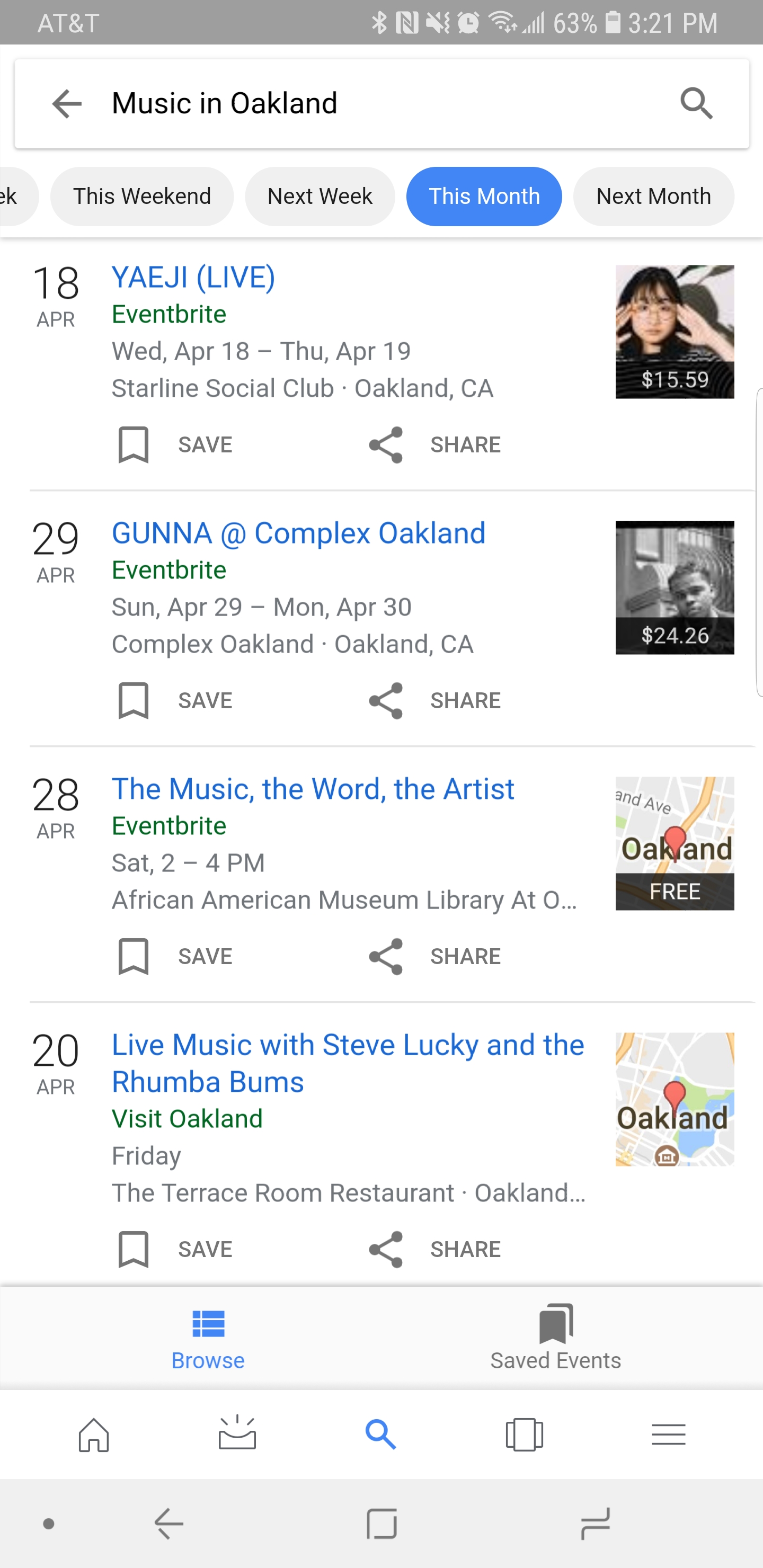
The new search experience, which leverages Event structured data,
helps users find events through Google Search and other products such as Google Maps. In
addition, enriched search
results often include advanced interactive features, which let users perform certain
actions (such as viewing event details) while still in Search. For example, if a user
searches for “concerts in Denver,” an immersive-event discovery experience appears in
markets where the enriched event search is active.
Eventbrite’s SEO team followed Google’s event
documentation when implementing Event structured data more
widely across their website. Working with a base template, “the actual implementation time
wasn’t too long at all,” Jilo says. The team made only minor tweaks to their structured data
afterward, and found the events experience to be extremely scalable. Now, any event published
across Eventbrite has structured data markup, and
consumers in the US will be shown the enriched search results, allowing them to more easily
browse and discover things to do. Eventbrite also used Search Console
and Structured Data Testing Tool to eliminate any errors in the markup data.
After adding Google recommended structured data properties,
the team ran tests on various event pages. “Because of the structured data, Google was able
to surface the event date, venue, and other key details to make the information stand out from
other search results,” Jilo says. “Initially, we weren’t exactly sure what benefits we would
see.”
Result
Multiple ongoing SEO projects can make it difficult to determine exactly what results in
increased traffic, conversions, or sales. But Eventbrite believes the Google Event search
experience has been effective. Jilo carefully delineates the results: “In the month following
implementation of the new search experience, we saw roughly a 100-percent increase in the
typical year-over-year growth of traffic from Google Search to our event listing pages,
according to Google Analytics.” The enriched search experience “definitely has been helpful
for driving traffic and getting additional ticket sales.”
100%
Increase in the typical YOY growth of traffic from Google Search to event listing pages, according to Google Analytics
“Within two or three weeks we started seeing a visual difference in our event search
results on Google,” Jilo says. “The Google Search experience definitely helps drive more
eyeballs to event pages. And when those people convert, it translates to incremental
ticket sales for our event creators.”
Having implemented Event structured data on their primary discovery
pages, Eventbrite expects to keep this functionality on any new discovery page types. “We
certainly will be looking at adding Event structured data on
those pages as well,” Jilo says. “The Google search experience for events has definitely been
a positive step.”
How we apply this
We study Google's own case studies for the mechanism, not the headline number. The useful question is which specific change produced the result and whether a client's site has the same lever.
Related services