Wenn Ihre Website nutzergenerierte Bewertungen über einstellende Organisationen veröffentlicht, fügen Sie
EmployerAggregateRating strukturierte Daten zu Ihrer Website hinzu.
EmployerAggregateRating ist eine Bewertung einer einstellenden Organisation, die aus vielen Nutzerbewertungen zusammengestellt wurde. Das Hinzufügen von EmployerAggregateRating kann Arbeitssuchenden Bewertungen über eine einstellende Organisation bieten, um ihnen bei der Jobwahl zu helfen. Es bietet auch eine prominente Markenplatzierung in der angereicherten Jobsuche bei Google.
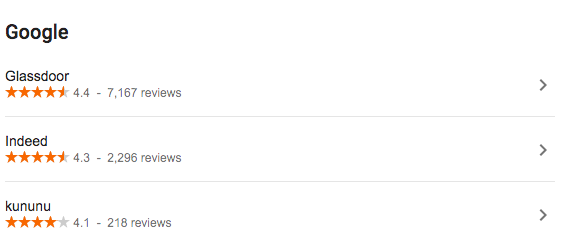

in der Vorschau anzeigen.
Beispiel Hier ist ein Beispiel für EmployerAggregateRating
<html>
<head>
<title>World’s Best Coffee Shop</title>
<script type=”application/ld+json”>
{
“@context” : “https://schema.org/”,
“@type”: “EmployerAggregateRating”,
“itemReviewed”: {
“@type”: “Organization”,
“name” : “World’s Best Coffee Shop”,
“sameAs” : “https://example.com”
},
“ratingValue”: 91,
“bestRating”: 100,
“worstRating”: 1,
“ratingCount” : “10561”
}
</script>
</head>
<body>
</body>
</html>
So fügen Sie strukturierte Daten hinzu
Strukturierte Daten sind ein standardisiertes Format, um Informationen über eine Seite bereitzustellen und den Seiteninhalt zu klassifizieren. Wenn Sie neu bei strukturierten Daten sind, können Sie mehr darüber erfahren,.
wie strukturierte Daten funktionieren
- Hier ist ein Überblick darüber, wie man strukturierte Daten erstellt, testet und veröffentlicht. Fügen Sie dieerforderlichen Eigenschaften hinzu. Basierend auf dem Format, das Sie verwenden, erfahren Sie, wo Sie.
- Erfahren Sie, wie Sie strukturierte Daten mit JavaScript generieren.
- Befolgen Sie die
Richtlinien
Validieren Sie Ihren Code mit dem - Rich Results Test und beheben Sie alle kritischen Fehler. Erwägen Sie auch, alle nicht-kritischen Probleme zu beheben, die im Tool markiert werden könnten, da sie dazu beitragen können, die Qualität Ihrer strukturierten Daten zu verbessern (dies ist jedoch nicht erforderlich, um sich für Rich Results zu qualifizieren). Stellen Sie einige Seiten bereit, die Ihre strukturierten Daten enthalten, und verwenden Sie das
URL Inspection toolum zu testen, wie Google die Seite sieht. Stellen Sie sicher, dass Ihre Seite für Google zugänglich ist und nicht durch eine robots.txt-Datei, das
noindex. - Hinweis
: Planen Sie Zeit für das erneute Crawlen und Indexieren ein. Denken Sie daran, dass es nach der Veröffentlichung einer Seite einige Tage dauern kann, bis Google sie findet und crawlt.Um Google über zukünftige Änderungen auf dem Laufenden zu halten, empfehlen wir Ihnen,
eine Sitemap einzureichen.
. Sie können dies mit der
Search Console Sitemap API
- manuelle Maßnahmen
- dagegen ergreifen. Sobald Sie das Problem behoben haben, können Sie Ihre Website zur
- erneuten Überprüfung
- einreichen.
- Technische Richtlinien
Inhaltsrichtlinien
- Richtlinien für die Qualität angereicherter Suchergebnisse
Search EssentialsAllgemeine Richtlinien für strukturierte Daten - Technische Richtlinien
- Stellen Sie sicher, dass die Bewertungen für Nutzer auf der Seite verfügbar sind, auf der Sie
EmployerAggregateRating
- strukturierte Daten hinzufügen. Es muss für Nutzer sofort ersichtlich sein, dass die Seite Bewertungsinhalte enthält.
- Stellen Sie Bewertungsinformationen über eine bestimmte einstellende Organisation bereit, nicht über eine Kategorie oder eine Liste von Elementen. Zum Beispiel sind “Top 10 der besten Arbeitgeber” und “Technologieunternehmen” keine spezifischen einstellenden Organisationen.
- Standardmäßig geht Google davon aus, dass Ihre Website eine 5-Punkte-Skala verwendet, wobei 5 die bestmögliche Bewertung und 1 die schlechteste ist, aber Sie können jede andere Skala verwenden. Wenn Sie eine andere Skala verwenden, können Sie die besten und schlechtesten Bewertungen angeben, und Google skaliert dies auf das 5-Sterne-System.
Inhaltsrichtlinien
Die Anzahl der Bewertungen muss tatsächliche Bewertungen widerspiegeln, die Nutzer abgeben. Die Gesamtpunktzahl muss genau aus den bereitgestellten Bewertungen abgeleitet werden. Definitionen für strukturierte Datentypen. Dieser Abschnitt beschreibt die strukturierten Datentypen im Zusammenhang mit Arbeitgeber-Gesamtbewertungen. Sie müssen die erforderlichen Eigenschaften für Ihre Inhalte einfügen, damit sie für die Anzeige in erweiterten Suchergebnissen in Frage kommen.
EmployerAggregateRating
Die vollständige Definition von EmployerAggregateRating ist verfügbar unter
schema.org/EmployerAggregateRating.
Die von Google unterstützten Eigenschaften sind folgende:
| Erforderliche Eigenschaften | |
|---|---|
itemReviewed | Die Organisation, die bewertet wird. Die |
ratingCount | Die Gesamtzahl der Bewertungen der Organisation auf Ihrer Website. Mindestens eines von |
ratingValue | Eine numerische Qualitätsbewertung für das Element, entweder eine Zahl, ein Bruch oder ein Prozentsatz (zum Beispiel „4“, „60%“ oder „6 / 10“). |
reviewCount | Gibt die Anzahl der Personen an, die eine Rezension mit oder ohne begleitende |
| Empfohlene Eigenschaften | |
|---|---|
bestRating | Der höchste in diesem Bewertungssystem zulässige Wert. Wenn |
worstRating | Der niedrigste in diesem Bewertungssystem zulässige Wert. Wenn |
Fehlerbehebung
Wenn Sie Probleme bei der Implementierung oder dem Debuggen von strukturierten Daten haben, finden Sie hier einige Ressourcen,
die Ihnen helfen können.
- Wenn Sie ein Content-Management-System (CMS) verwenden oder sich jemand anderes um Ihre Website kümmert,
bitten Sie diese Person um Hilfe. Stellen Sie sicher, dass Sie jede Search Console-Meldung, die das Problem beschreibt, an sie weiterleiten. - Google garantiert nicht, dass Funktionen, die strukturierte Daten verwenden, in den Suchergebnissen angezeigt werden.
Eine Liste häufiger Gründe, warum Google Ihre Inhalte möglicherweise nicht in einem Rich Result anzeigt, finden Sie unter
Allgemeine Richtlinien für strukturierte Daten. - Möglicherweise liegt ein Fehler in Ihren strukturierten Daten vor. Überprüfen Sie die
Liste der Fehler in strukturierten Daten
und den Bericht zu nicht parsierbaren strukturierten Daten. - Wenn Sie eine manuelle Maßnahme gegen Ihre Seite erhalten haben, werden die strukturierten Daten auf
der Seite ignoriert (obwohl die Seite weiterhin in den Google-Suchergebnissen erscheinen kann). Um
Fehler bei strukturierten Datenzu beheben, verwenden Sie den Bericht zu manuellen Maßnahmen. - Überprüfen Sie die Richtlinien erneut, um festzustellen, ob Ihre Inhalte nicht den Richtlinien entsprechen. Das Problem kann entweder durch Spam-Inhalte oder durch die Verwendung von Spam-Markup verursacht werden.
Das Problem ist jedoch möglicherweise kein Syntaxproblem, weshalb der Test für Rich Results diese Probleme
möglicherweise nicht identifizieren kann. - Fehlerbehebung bei fehlenden Rich Results / Rückgang der Gesamtzahl der Rich Results.
- Geben Sie Google Zeit zum erneuten Crawlen und Indizieren. Denken Sie daran, dass es nach der
Veröffentlichung einer Seite einige Tage dauern kann, bis Google sie findet und crawled. Allgemeine Fragen zum Crawling und zur Indizierung finden Sie in den
Häufig gestellten Fragen zum Crawling und zur Indizierung in der Google Search Central. - Posten Sie eine Frage im Google Search Central Forum.
So setzen wir das um
Employer rating markup belongs on recruitment and review platforms. For most clients it is not applicable and we say so rather than adding markup with no eligible content.
Verwandte Leistungen