Пятница, 2 июня 2017 г.
Перед покупкой книги людям нравится получить представление о том, как они собираются провести несколько часов за чтением. Они просматривают синопсис, предисловие или даже пролог, чтобы понять, понравится ли им книга.

Сниппеты результатов поиска работают точно так же; они помогают людям решить, стоит ли тратить время на чтение страницы, которой принадлежит сниппет.
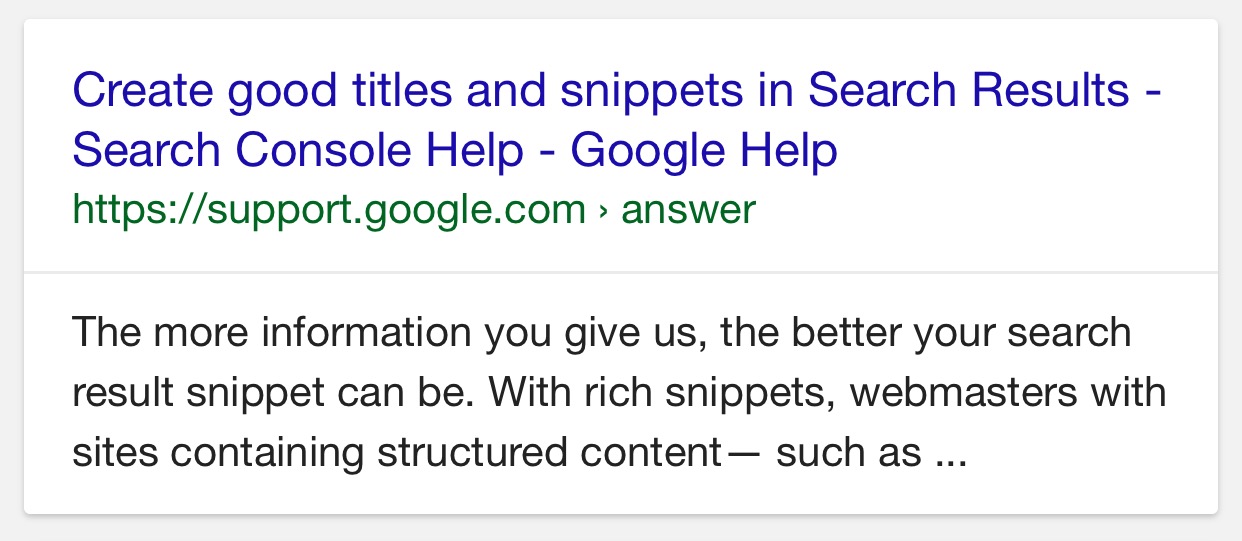
Чем более описательным и релевантным является сниппет результата поиска, тем выше вероятность того, что пользователи перейдут по нему и останутся довольны страницей, на которую попали. Исторически сложилось так, что сниппеты брались из 3 источников:
- Содержимое страницы
- Мета-описание
- Каталог DMOZ
Содержимое страницы — очевидный выбор для сниппетов результатов, и извлекаемый контент часто оказывается наиболее релевантным запросам пользователей. Однако бывают случаи, когда сам контент не является лучшим источником для сниппета. Например, когда кто-то ищет издательскую компанию для своей книги, релевантные главные страницы в выдаче могут содержать лишь несколько изображений с описанием бизнеса, логотип и, возможно, несколько ссылок, ни одна из которых не особенно полезна для сниппета.
Логичной альтернативой в случаях, когда на странице недостаточно текстового контента для сниппета результата поиска, является мета-описание. Это должны быть короткие аннотации, которые точно и емко описывают содержание в нескольких словах.
Наконец, если на странице мало текстового контента для генерации сниппета, а мета-описание отсутствует, не относится к теме страницы или имеет низкое качество, нашей альтернативой был
DMOZ, также известный как The Open Directory Project. Более 10 лет мы полагались на DMOZ для сниппетов, потому что качество сниппетов DMOZ часто было намного выше, чем у мета-описаний вебмастеров, или они были более описательными, чем то, что предоставляла страница.
С закрытием DMOZ, мы перестали использовать его каталоги для сниппетов, поэтому вебмастерам стало намного важнее предоставлять качественные мета-описания, если добавление дополнительного контента на страницу невозможно.
Что делает мета-описание хорошим?
Хорошие мета-описания — это короткие аннотации, которые точно описывают содержимое страницы. Они работают как презентация, убеждающая пользователя в том, что страница — именно то, что он ищет. Дополнительные советы вы найдете в нашей полезной
статье справочного центра по этой теме. Не забудьте убедиться, что как ваши настольные, так и мобильные страницы содержат как заголовок, так и мета-описание.
Каковы наиболее частые проблемы с мета-описаниями?
Поскольку мета-описания обычно видны только поисковым системам и другому программному обеспечению, вебмастера иногда забывают о них, оставляя их совершенно пустыми. По той же причине часто случается, что одно и то же мета-описание используется на нескольких (а иногда и на многих) страницах. С другой стороны, относительно часто описание оказывается совершенно не по теме, низкого качества или откровенным спамом. Эти проблемы портят поисковый опыт наших пользователей, поэтому мы предпочитаем игнорировать такие мета-описания.
Есть ли ограничение по символам для мета-описаний?
Ограничений на длину мета-описания не существует, но сниппеты результатов поиска усекаются по мере необходимости, как правило, под ширину экрана устройства.
Что будет с правилом NOODP для роботов rule?
Поскольку DMOZ (ODP) закрыт, мы больше не полагаемся на его данные, и поэтому правило NOODP уже не действует.
Могу ли я запретить Google использовать содержимое страницы в качестве сниппета?
Вы можете полностью запретить Google генерировать сниппеты, указав правило для роботов
nosnippet robots rule. Невозможно запретить использование содержимого страницы в качестве сниппета, одновременно разрешая другие источники.
Как всегда, если у вас есть вопросы, задавайте их на
форумах или найдите нас в Twitter!
Как мы это применяем
We archive Search Central announcements because client questions often trace back to a change that was announced years ago. Reading the original is faster than reconstructing it from second-hand summaries.
Связанные услуги